by Xinhua writer Zhang Yunlong
BEIJING, Nov. 6 (Xinhua) -- To understand the present, one must first understand its origins.
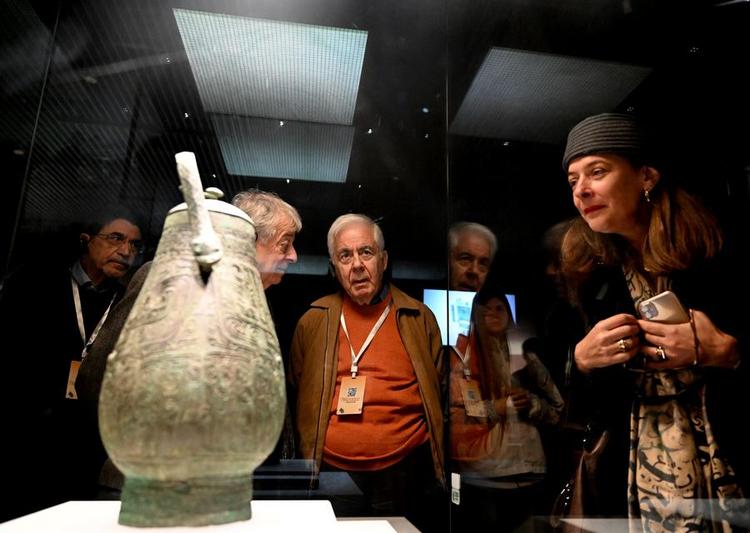
With the inaugural World Conference of Classics set to open in Beijing on Thursday, scholars from around the globe are gathering to engage in a cross-cultural exploration of ancient wisdom, opening the door to deeper mutual understanding between China and the West.
Ancient Chinese and Greek philosophies share intriguing parallels. Plato extolled the pursuit of wisdom as a high form of love, an idea mirrored in Chinese philosophy. Zhuangzi marveled at the silent beauty of the natural world, remarking, "The heavens and earth have great beauty, yet say nothing." And Lao Tzu described "supreme goodness" as being like water -- flexible, nurturing and unassuming.
These ideas reveal a common view that true wisdom is the pursuit of harmony and humility -- qualities that transcend cultural boundaries. And this convergence of values extends to ethics and moral cultivation.
Aristotle's cardinal virtues -- prudence, justice, fortitude and temperance -- parallel Mencius' Four Sprouts: Ren (benevolence), Yi (righteousness), Li (propriety) and Zhi (wisdom).
For Aristotle, virtues are honed through practice, in seeking a "golden mean" between extremes. Mencius, meanwhile, viewed virtues as innate "sprouts" that thrive when nurtured. Justice and Yi resonate with the shared principles of fairness; prudence and Zhi resonate with discernment; and temperance and Ren foster harmonious personal conduct. Despite their differences, both traditions emphasize inner strength and living a balanced, ethical life.
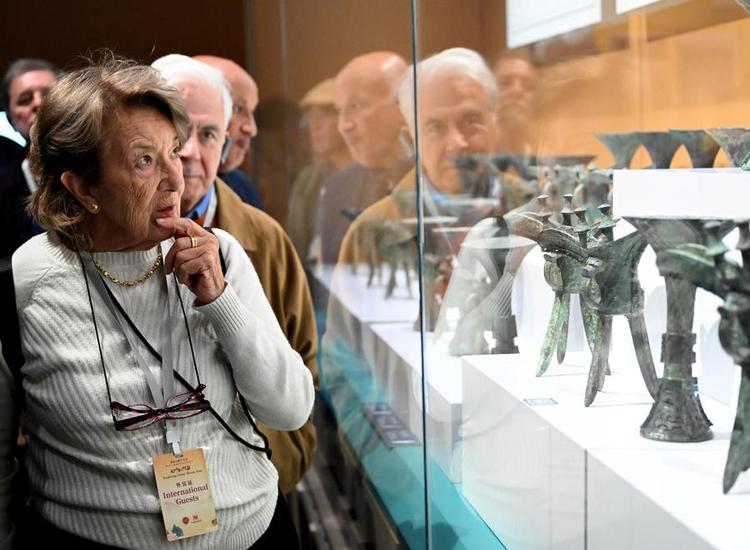
While Chinese and Western classical thought share ethical concerns, each tradition evolved within its own unique historical and social contexts. This conference provides an opportunity to explore how these ideas have shaped the cultural identities of both regions.
In addressing pressing issues in the world today like climate change and social fragmentation, classical wisdom provides guidance on sustainable, humane approaches to governance and social well-being.
Daoism's "action through inaction" advocates harmony with nature, echoing Stoic teachings about living in accordance with the natural order. Humanism, which traces its origins to the Sophists of Ancient Greece, resonates with the Confucian teaching that "People are the roots of a country." These ideas highlight the importance of ethical leadership and social responsibility in our interconnected world.
The World Conference of Classics in Beijing represents more than a celebration of ancient philosophy -- it aims to bridge civilizations.
By exploring the roots of traditions, people from China and beyond can deepen their understanding of each culture's values, paving the way for greater mutual respect and cooperation.
