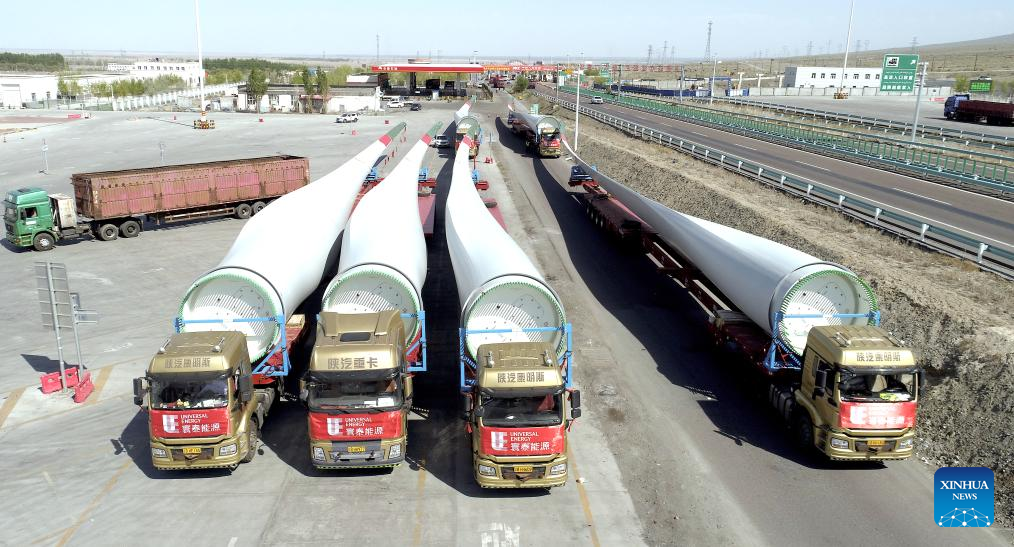
This aerial photo taken in April 2020 shows the vehicles carrying a batch of components from Chinese green power developer Universal Energy for the 50 MW wind power project in Kostanay of Kazakhstan. (Xinhua)
SHANGHAI/ALMATY, Sept. 14 (Xinhua) -- Braving the scorching sun, engineer Rinat Turganbekov patrolled through glittering solar panel arrays that adorn the expansive plains of Kazakhstan.
The Kapshagay photovoltaic power station, one of the largest single solar power projects in the Central Asian country, is a part of the China-Kazakhstan green energy cooperation initiative, jointly invested and constructed by the Chinese company Universal Energy and Kazakh counterparts.
As a seasoned member of Universal Energy Kazakhstan, Turganbekov has witnessed firsthand the remarkable transformation brought about by solar power stations, providing local residents with green and affordable electricity.
Meanwhile, along the Belt and Road, a series of cooperative efforts aimed at sustainable development are writing a new chapter of mutual benefit and win-win cooperation.
"Chinese companies have brought significant changes to my life," said the 36-year-old, who studied in Tianjin and is proficient in Chinese.
Initially, he worked as a translator at the company. During his tenure, his Chinese colleagues encouraged him to venture into project coordination.
During his five years at the Chinese company, the Kazakh engineer has participated in several construction projects. In 2020, the Kaskelen photovoltaic power station project, included on the list of key projects of China-Kazakhstan capacity and investment cooperation, was in a crucial phase.
Due to pandemic-related restrictions, Chinese employees could not return to Kazakhstan on time. Turganbekov, along with the Kazakh team, worked remotely with their Chinese counterparts, meticulously overcoming every challenge. Eventually, their efforts paid off, culminating in the successful and timely completion of the project.
"When I look back, I still get excited. We collaborated across time zones, and everyone's hearts were in the same place, striving for the same goal," Turganbekov said.
With the combined efforts of the Sino-Kazakh team, the Kaskelen photovoltaic power station was successfully connected to the grid and commenced power generation in June 2020, generating 80.8 million kilowatt-hours of electricity annually and reducing local carbon emissions by 80,800 tonnes.
Meanwhile, green energy cooperation along the Belt and Road brings not only clear skies, lucid waters and lush mountains, but also newfound green wealth for people.
Over these five years, Turganbekov has seen his income increase and he managed to purchase a house in the major city of Almaty. "Chinese companies have helped me grow and have improved the lives of our local people," he said.
According to Turganbekov, conventional power generation methods such as coal power tend to incur relatively high costs, consequently leading to elevated electricity prices for citizens.
Green energy not only facilitates Kazakhstan's transition towards sustainable development but also furnishes local residents with access to cost-effective electricity. "Particularly in the southern regions, there has historically been a deficit of electricity, necessitating transmission from the northern regions. However, with the establishment of solar and wind power stations by Chinese enterprises, residents in the southern regions no longer contend with electricity shortage."
Nan Yi, chairman of the Chinese energy company, revealed that since 2015, the company has been investing in new energy projects in Kazakhstan, including photovoltaic and wind energy stations. To date, it has completed the construction of six new energy stations with a total capacity of 380 megawatts, all listed on the key projects list of China-Kazakhstan capacity and investment cooperation.
These projects reduce carbon dioxide emissions by one million tonnes annually, while meeting the electricity needs of approximately 600,000 local households. As of now, the cumulative electricity generation of the new energy stations invested, constructed and operated by the company in Kazakhstan has surpassed 1.7 billion kilowatt-hours, equivalent to reducing carbon dioxide emissions by 1.7 million tonnes.
"Nowadays, more and more people are joining hands with each other to build the Belt and Road," Nan said. With a growing number of Chinese companies' present in Central Asia, solar power and wind power stations have gained widespread recognition.
Both state-owned and private enterprises are actively "going global," promoting standardized construction in local regions, and providing support for local development, Nan added.
According to the senior executive, through cooperation along the Belt and Road, the strengths of both China and its foreign partners can be better leveraged, ultimately achieving mutual benefits.
"The 'win-win example' in Kazakhstan has made it easier for us to explore the Uzbekistani market. According to the agreement, Universal Energy will invest in and construct a 500-megawatt wind power project in the country. In the future, we will also work with more countries along the Belt and Road," Nan said. -
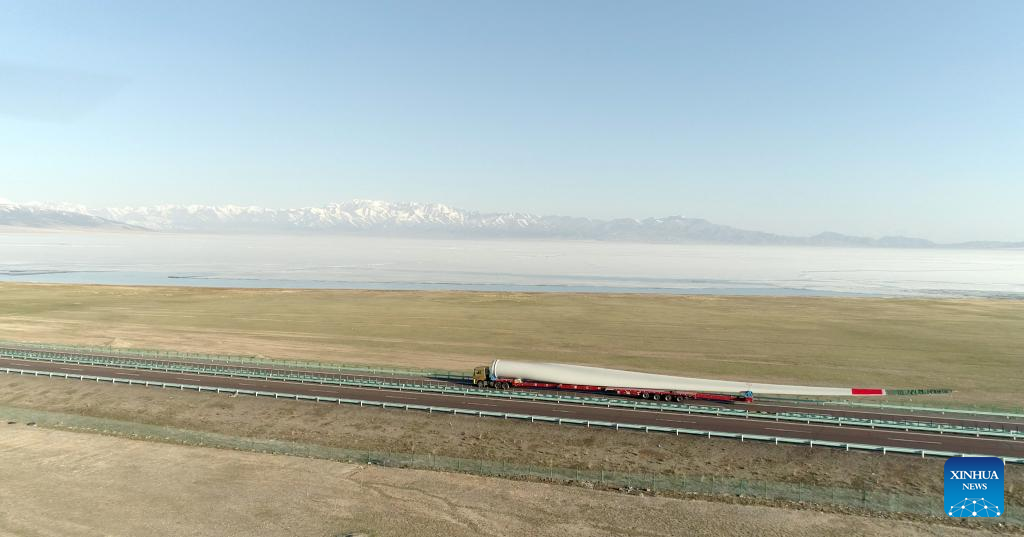
This aerial photo taken on April 24, 2020 shows a vehicle carrying a component from Chinese green power developer Universal Energy for the 50 MW wind power project in Kostanay of Kazakhstan, passing the Sayram Lake in northwest China's Xinjiang Uygur Autonomous Region. (Xinhua)
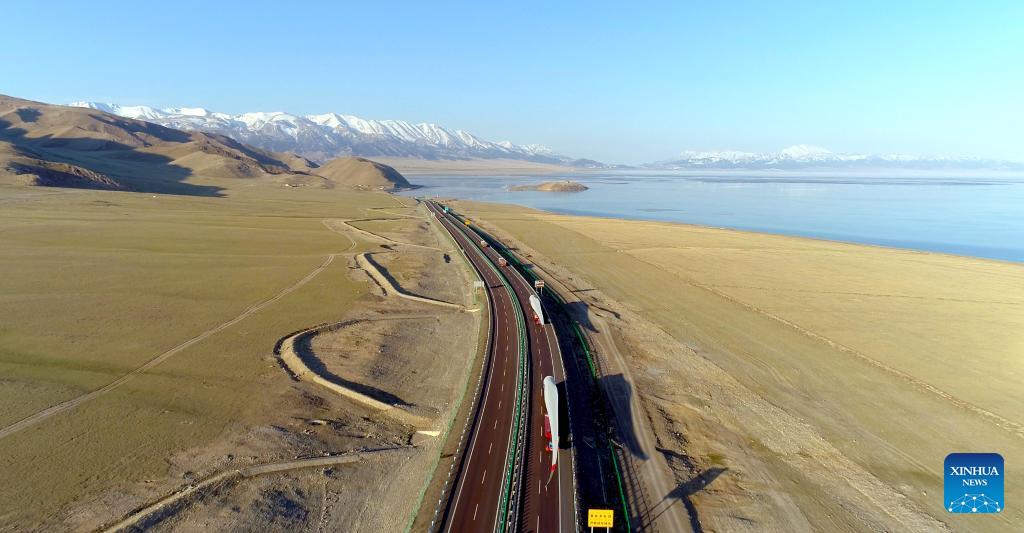
This aerial photo taken on April 24, 2020 shows the vehicles carrying a batch of components from Chinese green power developer Universal Energy for the 50 MW wind power project in Kostanay of Kazakhstan, passing the Sayram Lake in northwest China's Xinjiang Uygur Autonomous Region. (Xinhua)
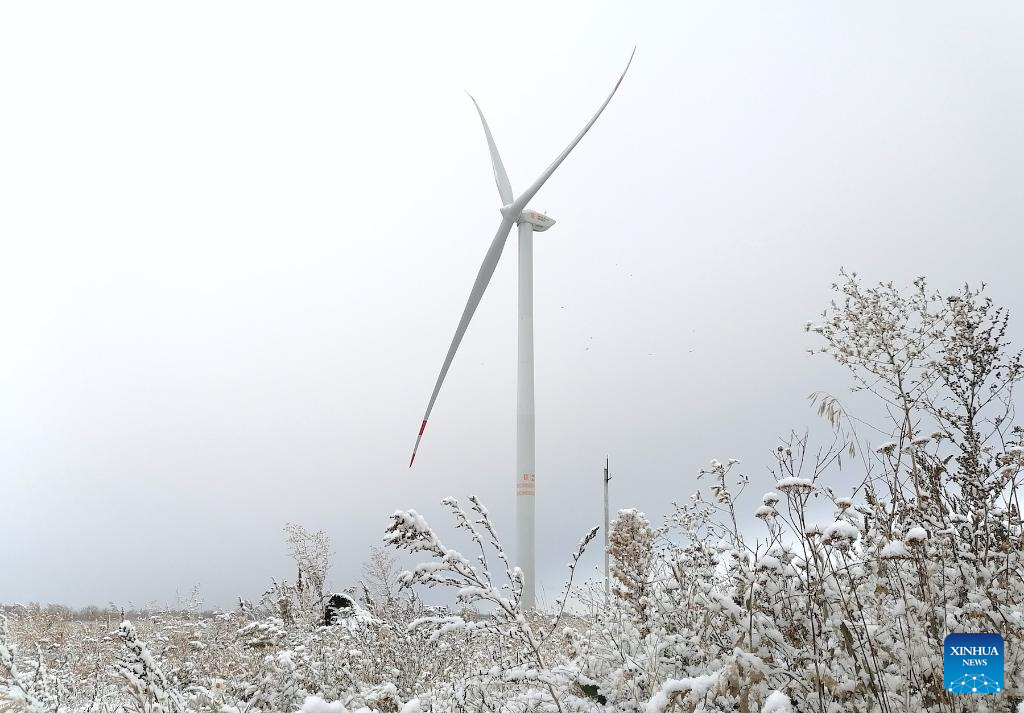
This photo taken on Oct. 22, 2020 shows a 50 MW wind power project in Kostanay, Kazakhstan. (Xinhua)
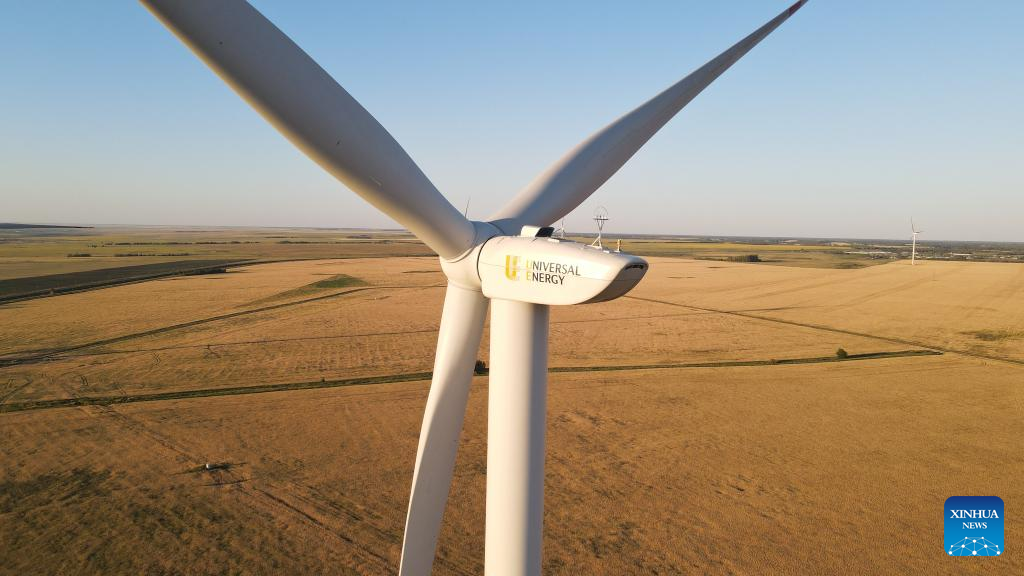
This aerial photo taken on Aug. 14, 2022 shows a 50 MW wind power project in Kostanay, Kazakhstan. (Xinhua)
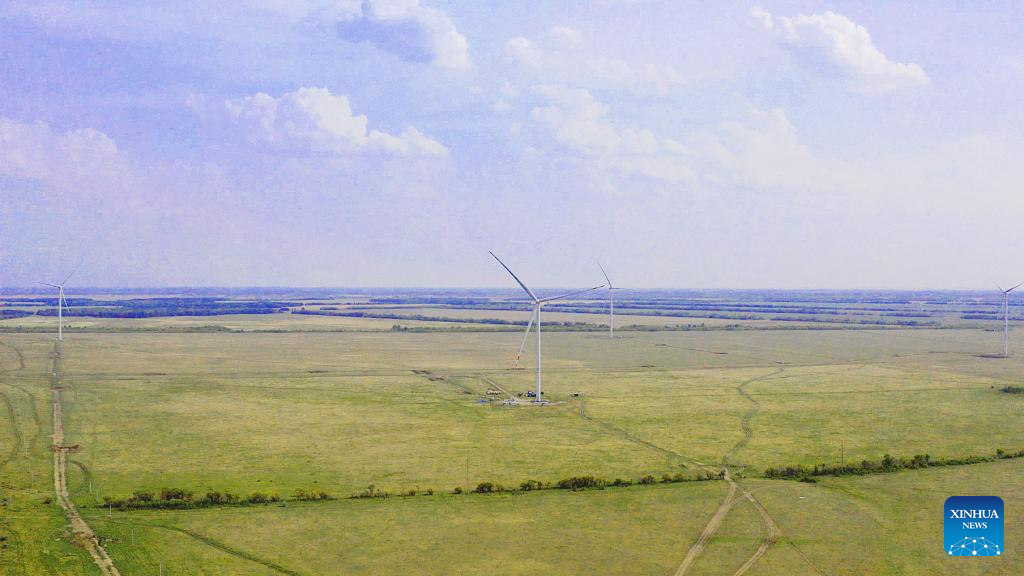
This photo taken on Feb. 25, 2022 shows a 50 MW wind power project in Kostanay, Kazakhstan. (Xinhua)
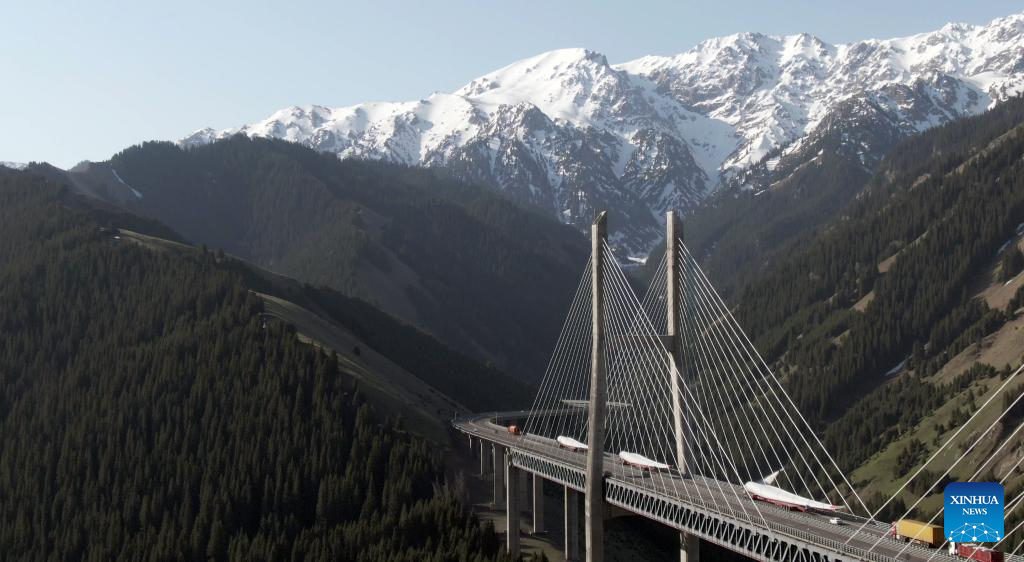
This aerial photo taken on April 24, 2020 shows the vehicles carrying a batch of components from Chinese green power developer Universal Energy for the 50 MW wind power project in Kostanay of Kazakhstan, driving on the Guozigou Bridge in Huocheng County, northwest China's Xinjiang Uygur Autonomous Region. (Xinhua)
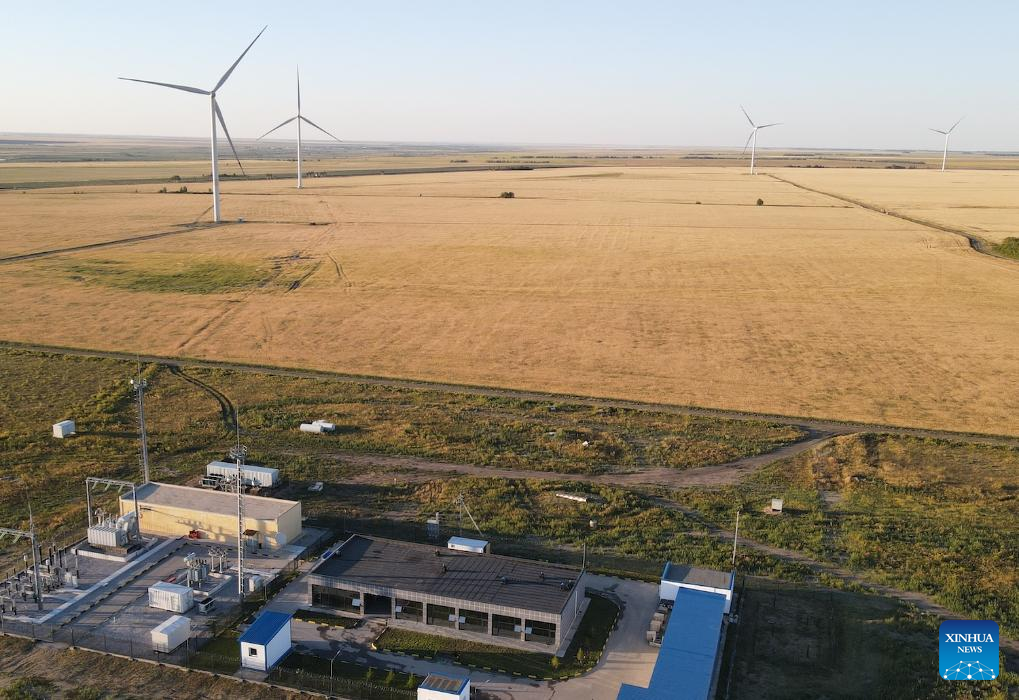
This aerial photo taken on Aug. 14, 2022 shows a 50 MW wind power project in Kostanay, Kazakhstan. (Xinhua)
