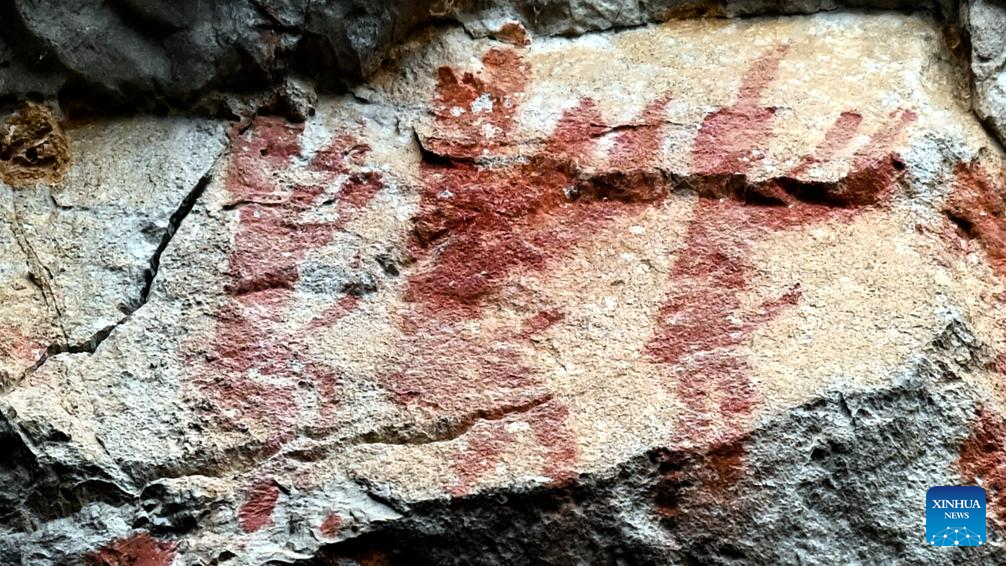
This photo taken on Aug. 8, 2023 shows a part of Huashan rock paintings in Ningming County, Chongzuo City, south China's Guangxi Zhuang Autonomous Region. The Zuojiang Huashan site is home to more than 1,900 well-preserved drawings on the face of the Huashan mountains along the Zuojiang River and its tributary Mingjiang River in Chongzuo.
The brownish red paintings, created from the Warring States Period (475-221 BC) to East Han Dynasty (25-220), depict the sacrifices of the Luoyue people, ancestors of today's Zhuang ethnic minority.
It is said that the major images of the paintings are frog-shaped people -- a totem of the Zhuang ethnic group. Some of those paintings also show sports scenes.
It remains a mystery how the Luoyue managed to paint on the rocks.
The group of rock paintings was included into UNESCO's world heritage list in 2016. (Xinhua/Zhang Ailin)
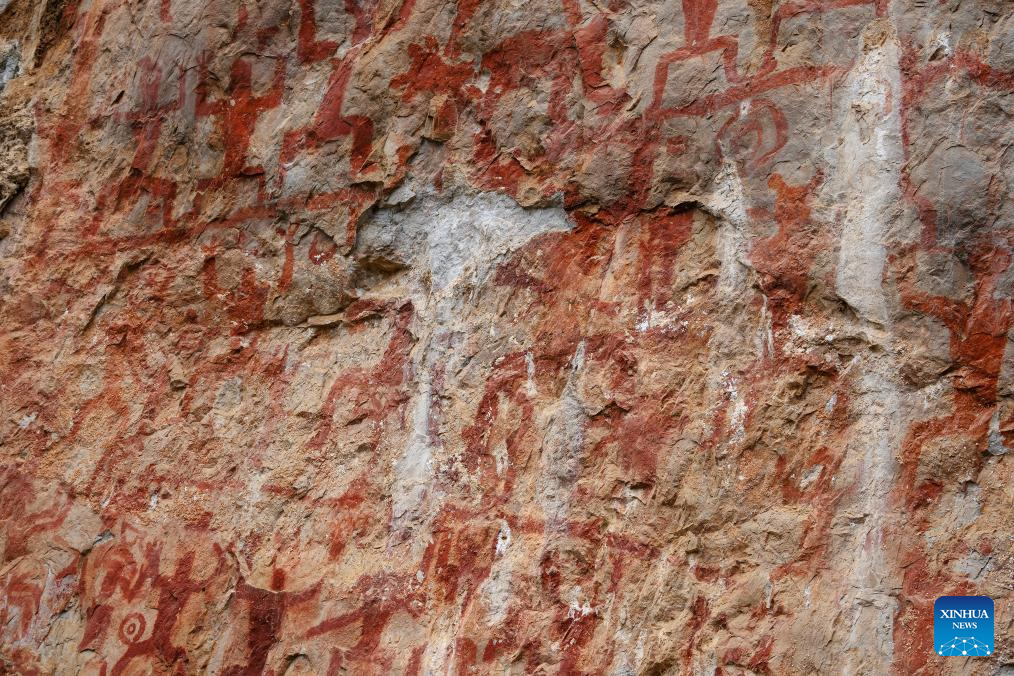
This photo taken on Aug. 8, 2023 shows a part of Huashan rock paintings in Ningming County, Chongzuo City, south China's Guangxi Zhuang Autonomous Region. The Zuojiang Huashan site is home to more than 1,900 well-preserved drawings on the face of the Huashan mountains along the Zuojiang River and its tributary Mingjiang River in Chongzuo.
The brownish red paintings, created from the Warring States Period (475-221 BC) to East Han Dynasty (25-220), depict the sacrifices of the Luoyue people, ancestors of today's Zhuang ethnic minority.
It is said that the major images of the paintings are frog-shaped people -- a totem of the Zhuang ethnic group. Some of those paintings also show sports scenes.
It remains a mystery how the Luoyue managed to paint on the rocks.
The group of rock paintings was included into UNESCO's world heritage list in 2016. (Xinhua/Fei Maohua)
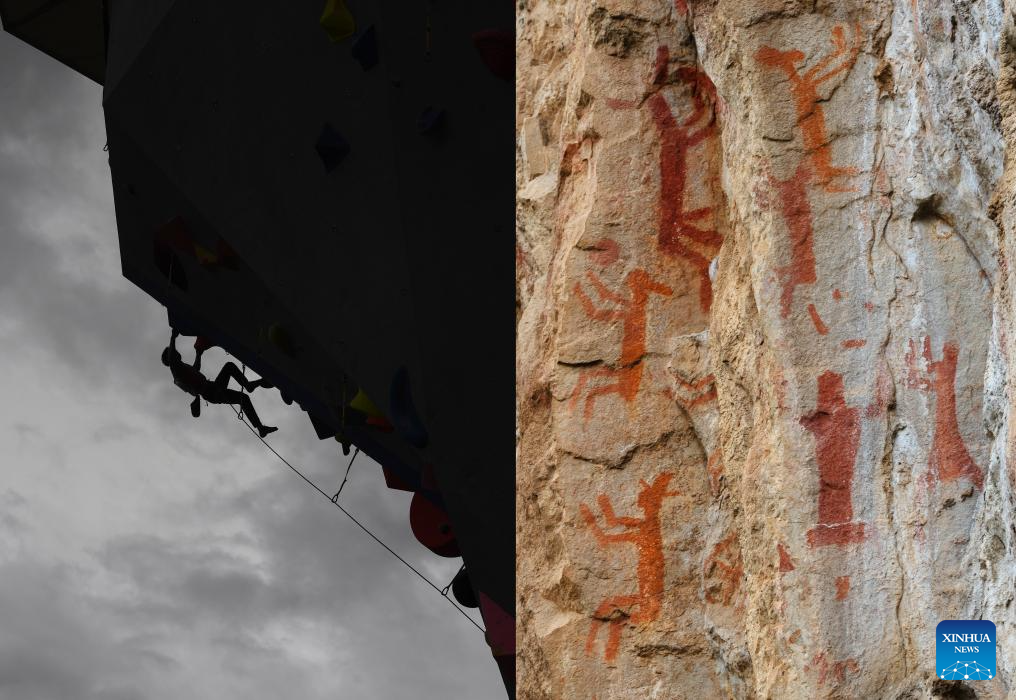
This combo photo shows a person climbing a cliff (L, file photo) and a Huashan rock painting depicting cliff climbing (photo taken by Xinhua photographer Fei Maohua on Aug. 8, 2023) in Ningming County, Chongzuo City, south China's Guangxi Zhuang Autonomous Region. The Zuojiang Huashan site is home to more than 1,900 well-preserved drawings on the face of the Huashan mountains along the Zuojiang River and its tributary Mingjiang River in Chongzuo.
The brownish red paintings, created from the Warring States Period (475-221 BC) to East Han Dynasty (25-220), depict the sacrifices of the Luoyue people, ancestors of today's Zhuang ethnic minority.
It is said that the major images of the paintings are frog-shaped people -- a totem of the Zhuang ethnic group. Some of those paintings also show sports scenes.
It remains a mystery how the Luoyue managed to paint on the rocks.
The group of rock paintings was included into UNESCO's world heritage list in 2016. (Xinhua)
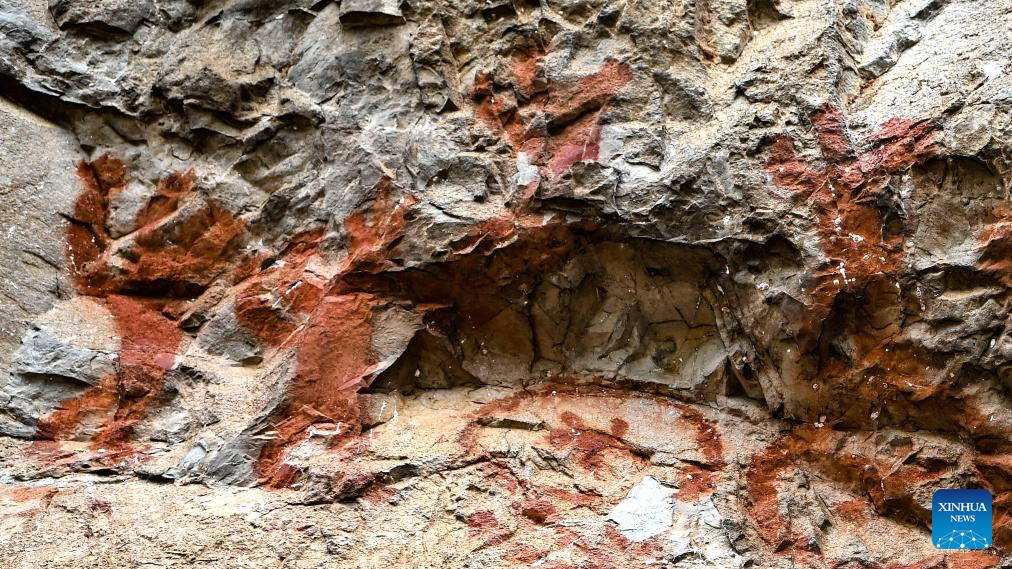
This photo taken on Aug. 8, 2023 shows a part of Huashan rock paintings depicting a ceremony in Ningming County, Chongzuo City, south China's Guangxi Zhuang Autonomous Region. The Zuojiang Huashan site is home to more than 1,900 well-preserved drawings on the face of the Huashan mountains along the Zuojiang River and its tributary Mingjiang River in Chongzuo.
The brownish red paintings, created from the Warring States Period (475-221 BC) to East Han Dynasty (25-220), depict the sacrifices of the Luoyue people, ancestors of today's Zhuang ethnic minority.
It is said that the major images of the paintings are frog-shaped people -- a totem of the Zhuang ethnic group. Some of those paintings also show sports scenes.
It remains a mystery how the Luoyue managed to paint on the rocks.
The group of rock paintings was included into UNESCO's world heritage list in 2016. (Xinhua/Zhang Ailin)
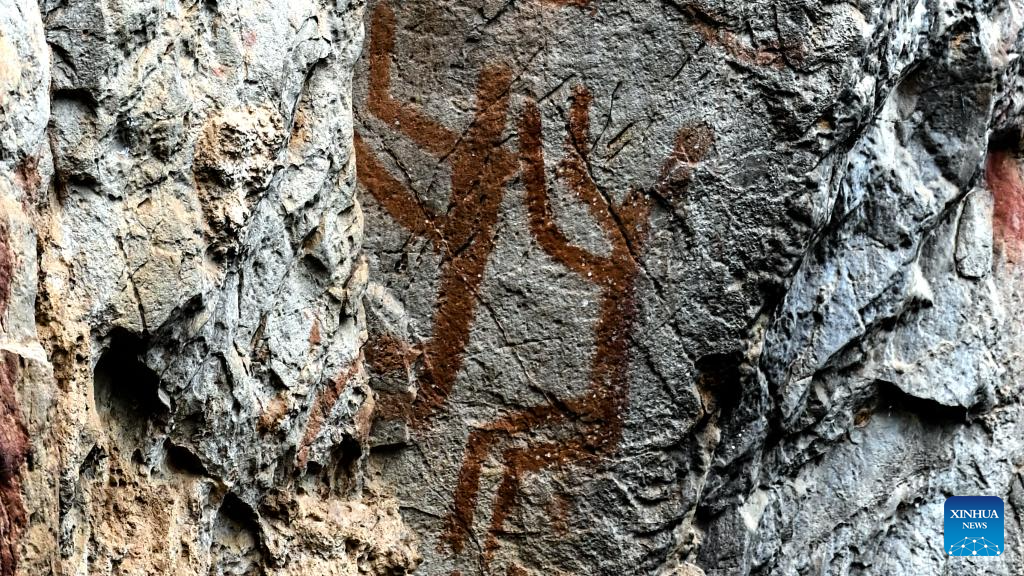
This photo taken on Aug. 8, 2023 shows a part of Huashan rock paintings in Ningming County, Chongzuo City, south China's Guangxi Zhuang Autonomous Region. The Zuojiang Huashan site is home to more than 1,900 well-preserved drawings on the face of the Huashan mountains along the Zuojiang River and its tributary Mingjiang River in Chongzuo.
The brownish red paintings, created from the Warring States Period (475-221 BC) to East Han Dynasty (25-220), depict the sacrifices of the Luoyue people, ancestors of today's Zhuang ethnic minority.
It is said that the major images of the paintings are frog-shaped people -- a totem of the Zhuang ethnic group. Some of those paintings also show sports scenes.
It remains a mystery how the Luoyue managed to paint on the rocks.
The group of rock paintings was included into UNESCO's world heritage list in 2016. (Xinhua/Zhang Ailin)
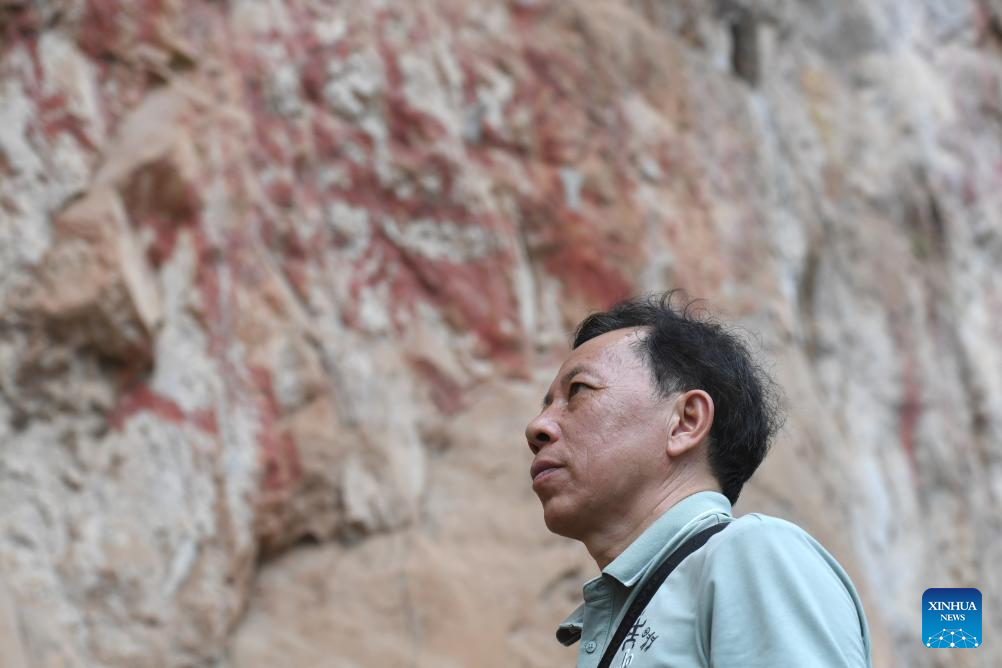
Zhu Qiuping, a cultural relics protection expert, contemplates Huashan rock paintings in Ningming County, Chongzuo City, south China's Guangxi Zhuang Autonomous Region, Aug. 8, 2023. The Zuojiang Huashan site is home to more than 1,900 well-preserved drawings on the face of the Huashan mountains along the Zuojiang River and its tributary Mingjiang River in Chongzuo.
The brownish red paintings, created from the Warring States Period (475-221 BC) to East Han Dynasty (25-220), depict the sacrifices of the Luoyue people, ancestors of today's Zhuang ethnic minority.
It is said that the major images of the paintings are frog-shaped people -- a totem of the Zhuang ethnic group. Some of those paintings also show sports scenes.
It remains a mystery how the Luoyue managed to paint on the rocks.
The group of rock paintings was included into UNESCO's world heritage list in 2016. (Xinhua/Zhou Hua)
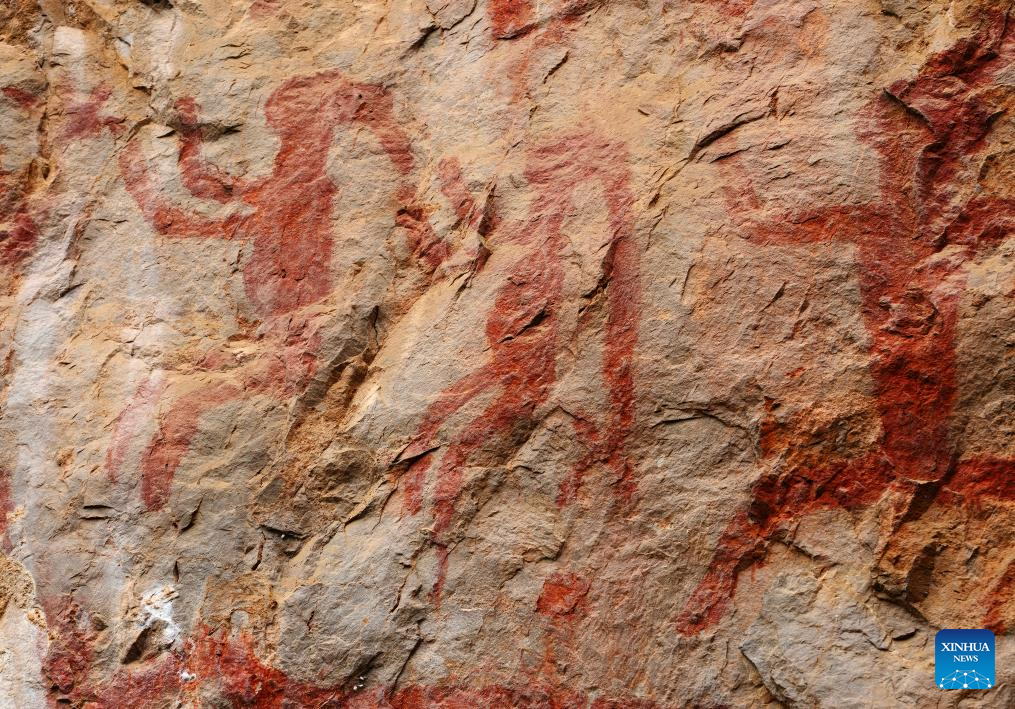
This photo taken on Aug. 8, 2023 shows a part of Huashan rock paintings depicting pregnant women in Ningming County, Chongzuo City, south China's Guangxi Zhuang Autonomous Region. The Zuojiang Huashan site is home to more than 1,900 well-preserved drawings on the face of the Huashan mountains along the Zuojiang River and its tributary Mingjiang River in Chongzuo.
The brownish red paintings, created from the Warring States Period (475-221 BC) to East Han Dynasty (25-220), depict the sacrifices of the Luoyue people, ancestors of today's Zhuang ethnic minority.
It is said that the major images of the paintings are frog-shaped people -- a totem of the Zhuang ethnic group. Some of those paintings also show sports scenes.
It remains a mystery how the Luoyue managed to paint on the rocks.
The group of rock paintings was included into UNESCO's world heritage list in 2016. (Xinhua/Fei Maohua)
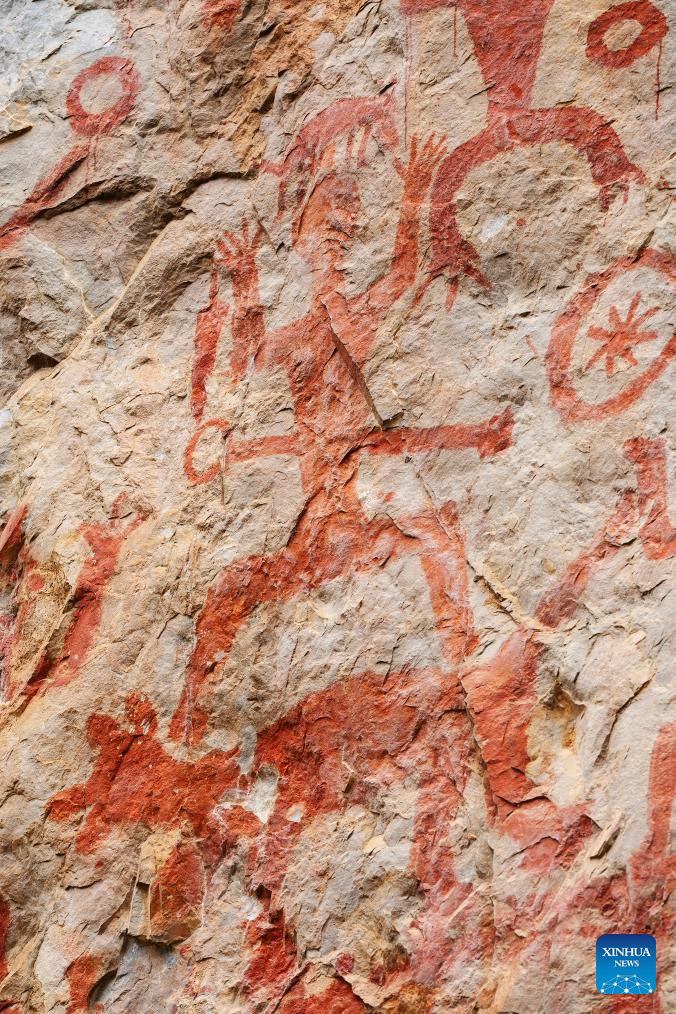
This photo taken on Aug. 8, 2023 shows a part of Huashan rock paintings in Ningming County, Chongzuo City, south China's Guangxi Zhuang Autonomous Region. The Zuojiang Huashan site is home to more than 1,900 well-preserved drawings on the face of the Huashan mountains along the Zuojiang River and its tributary Mingjiang River in Chongzuo.
The brownish red paintings, created from the Warring States Period (475-221 BC) to East Han Dynasty (25-220), depict the sacrifices of the Luoyue people, ancestors of today's Zhuang ethnic minority.
It is said that the major images of the paintings are frog-shaped people -- a totem of the Zhuang ethnic group. Some of those paintings also show sports scenes.
It remains a mystery how the Luoyue managed to paint on the rocks.
The group of rock paintings was included into UNESCO's world heritage list in 2016. (Xinhua/Fei Maohua)
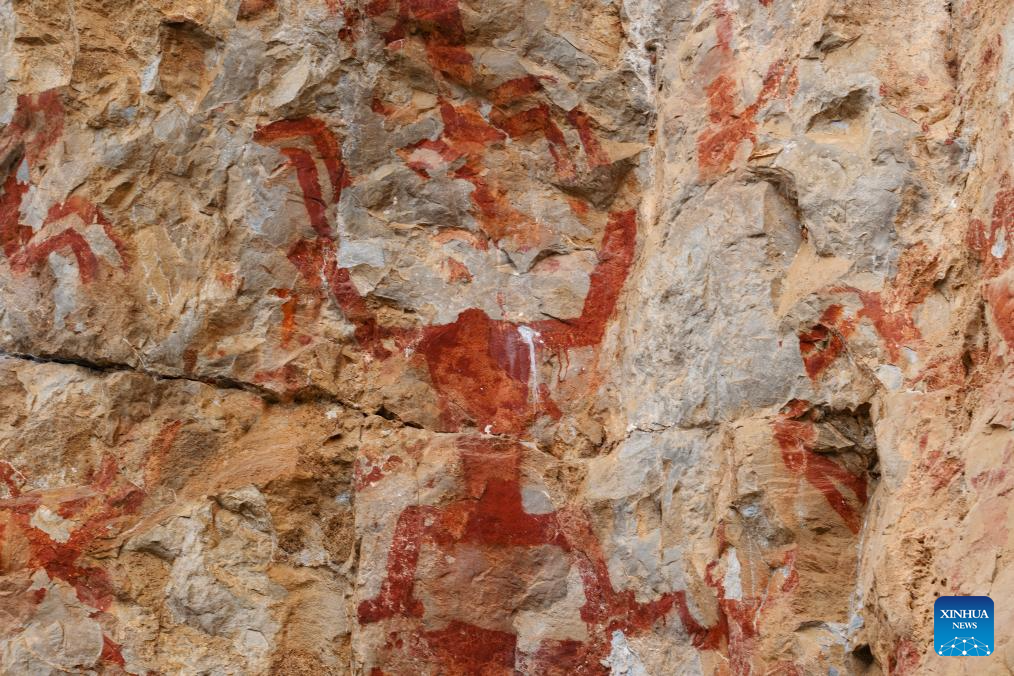
This photo taken on Aug. 8, 2023 shows a part of Huashan rock paintings in Ningming County, Chongzuo City, south China's Guangxi Zhuang Autonomous Region. The Zuojiang Huashan site is home to more than 1,900 well-preserved drawings on the face of the Huashan mountains along the Zuojiang River and its tributary Mingjiang River in Chongzuo.
The brownish red paintings, created from the Warring States Period (475-221 BC) to East Han Dynasty (25-220), depict the sacrifices of the Luoyue people, ancestors of today's Zhuang ethnic minority.
It is said that the major images of the paintings are frog-shaped people -- a totem of the Zhuang ethnic group. Some of those paintings also show sports scenes.
It remains a mystery how the Luoyue managed to paint on the rocks.
The group of rock paintings was included into UNESCO's world heritage list in 2016. (Xinhua/Fei Maohua)
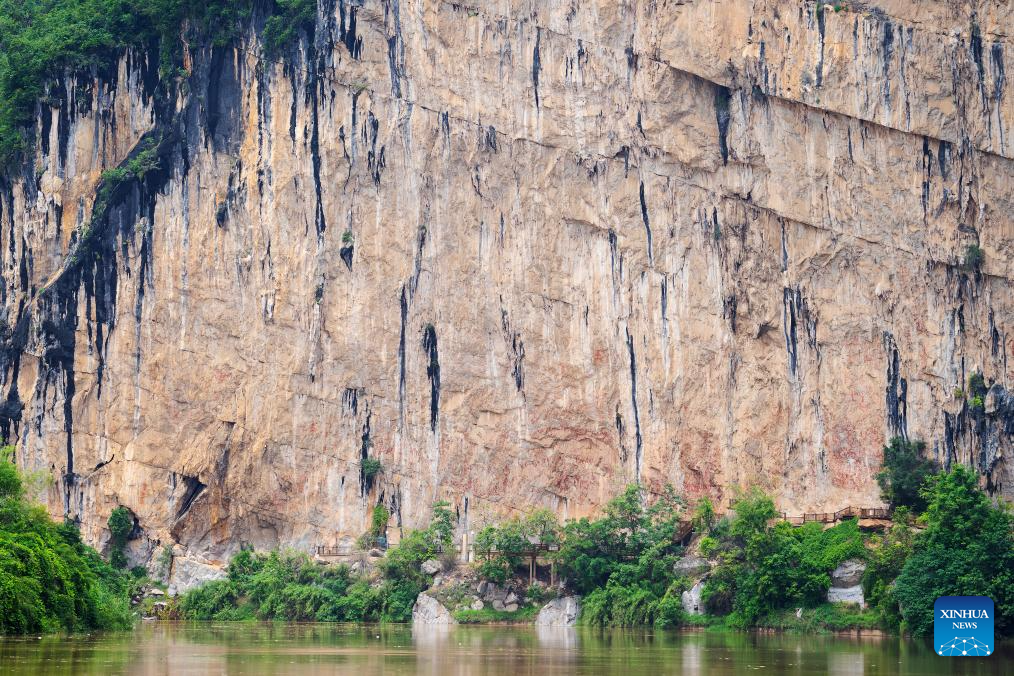
This photo taken on Aug. 8, 2023 shows Huashan rock paintings in Ningming County, Chongzuo City, south China's Guangxi Zhuang Autonomous Region. The Zuojiang Huashan site is home to more than 1,900 well-preserved drawings on the face of the Huashan mountains along the Zuojiang River and its tributary Mingjiang River in Chongzuo.
The brownish red paintings, created from the Warring States Period (475-221 BC) to East Han Dynasty (25-220), depict the sacrifices of the Luoyue people, ancestors of today's Zhuang ethnic minority.
It is said that the major images of the paintings are frog-shaped people -- a totem of the Zhuang ethnic group. Some of those paintings also show sports scenes.
It remains a mystery how the Luoyue managed to paint on the rocks.
The group of rock paintings was included into UNESCO's world heritage list in 2016. (Xinhua/Fei Maohua)
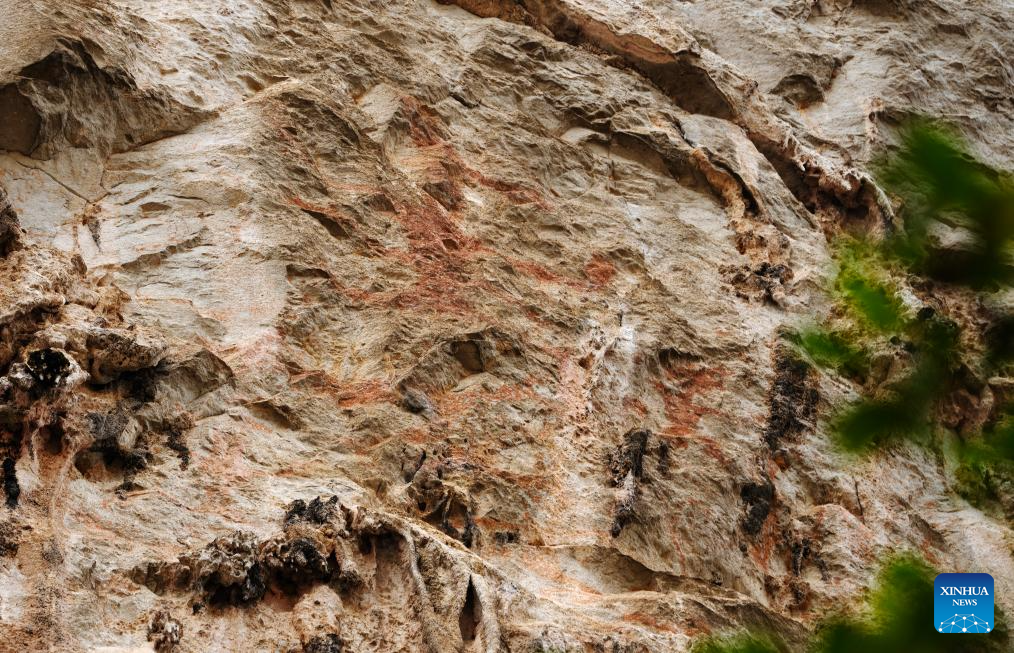
This photo taken on Aug. 8, 2023 shows a rock painting with a height of 3.58 meters, the biggest one of Huashan rock paintings, in Ningming County, Chongzuo City, south China's Guangxi Zhuang Autonomous Region. The Zuojiang Huashan site is home to more than 1,900 well-preserved drawings on the face of the Huashan mountains along the Zuojiang River and its tributary Mingjiang River in Chongzuo.
The brownish red paintings, created from the Warring States Period (475-221 BC) to East Han Dynasty (25-220), depict the sacrifices of the Luoyue people, ancestors of today's Zhuang ethnic minority.
It is said that the major images of the paintings are frog-shaped people -- a totem of the Zhuang ethnic group. Some of those paintings also show sports scenes.
It remains a mystery how the Luoyue managed to paint on the rocks.
The group of rock paintings was included into UNESCO's world heritage list in 2016. (Xinhua/Fei Maohua)
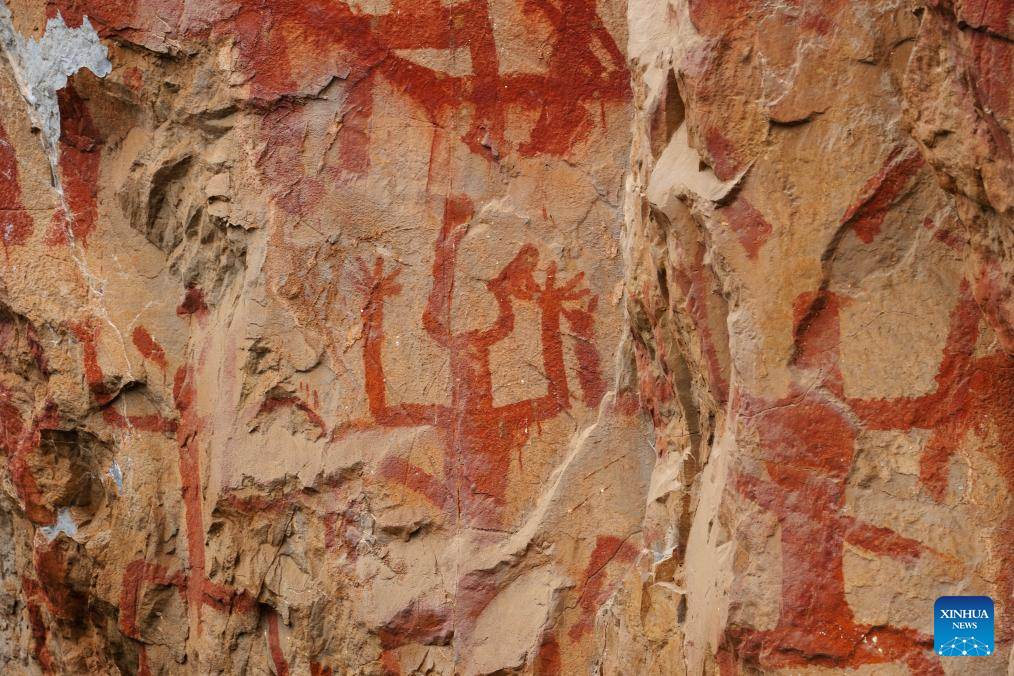
This photo taken on Aug. 8, 2023 shows a part of Huashan rock paintings in Ningming County, Chongzuo City, south China's Guangxi Zhuang Autonomous Region. The Zuojiang Huashan site is home to more than 1,900 well-preserved drawings on the face of the Huashan mountains along the Zuojiang River and its tributary Mingjiang River in Chongzuo.
The brownish red paintings, created from the Warring States Period (475-221 BC) to East Han Dynasty (25-220), depict the sacrifices of the Luoyue people, ancestors of today's Zhuang ethnic minority.
It is said that the major images of the paintings are frog-shaped people -- a totem of the Zhuang ethnic group. Some of those paintings also show sports scenes.
It remains a mystery how the Luoyue managed to paint on the rocks.
The group of rock paintings was included into UNESCO's world heritage list in 2016. (Xinhua/Fei Maohua)
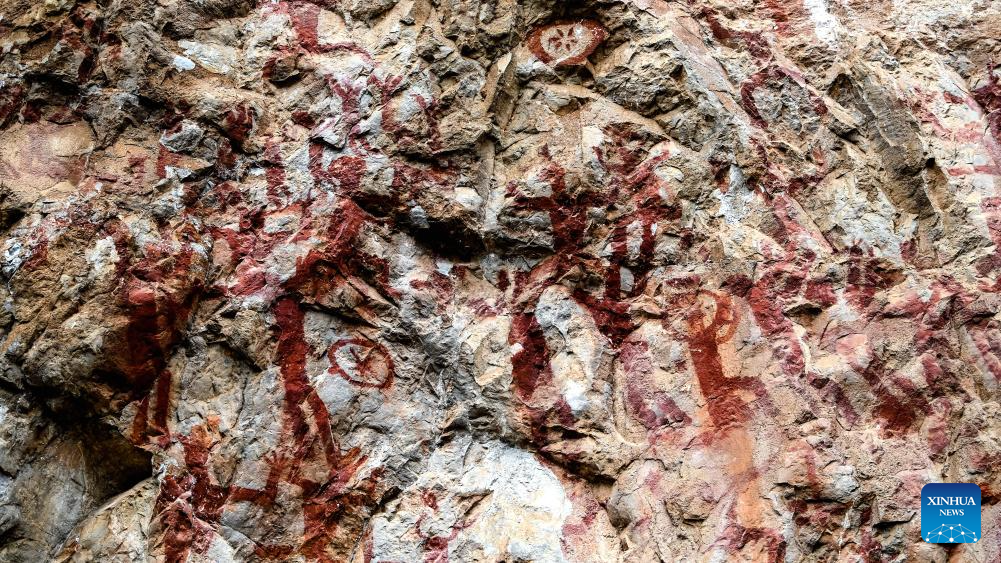
This photo taken on Aug. 8, 2023 shows a part of Huashan rock paintings in Ningming County, Chongzuo City, south China's Guangxi Zhuang Autonomous Region. The Zuojiang Huashan site is home to more than 1,900 well-preserved drawings on the face of the Huashan mountains along the Zuojiang River and its tributary Mingjiang River in Chongzuo.
The brownish red paintings, created from the Warring States Period (475-221 BC) to East Han Dynasty (25-220), depict the sacrifices of the Luoyue people, ancestors of today's Zhuang ethnic minority.
It is said that the major images of the paintings are frog-shaped people -- a totem of the Zhuang ethnic group. Some of those paintings also show sports scenes.
It remains a mystery how the Luoyue managed to paint on the rocks.
The group of rock paintings was included into UNESCO's world heritage list in 2016. (Xinhua/Zhang Ailin)
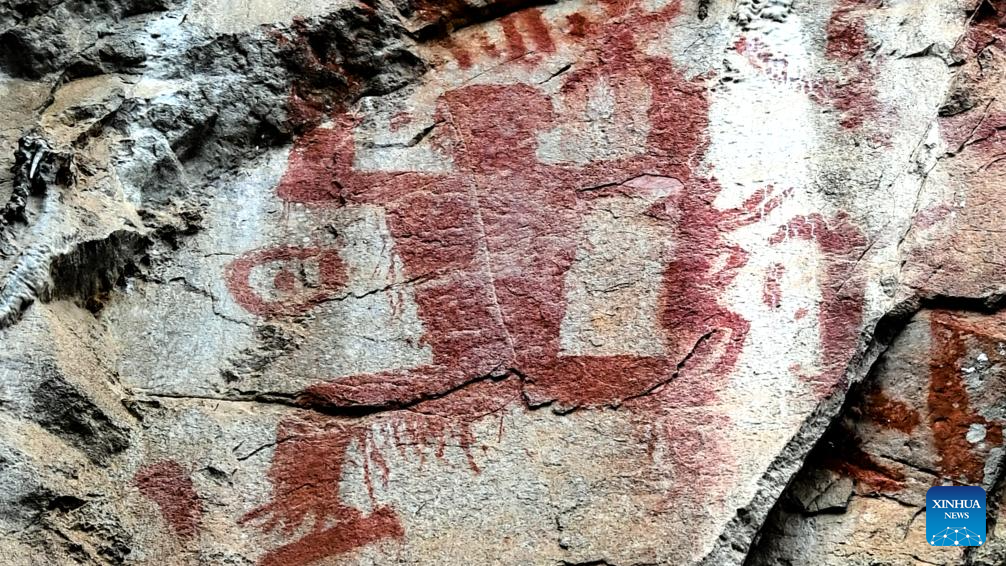
This photo taken on Aug. 8, 2023 shows a part of Huashan rock paintings in Ningming County, Chongzuo City, south China's Guangxi Zhuang Autonomous Region. The Zuojiang Huashan site is home to more than 1,900 well-preserved drawings on the face of the Huashan mountains along the Zuojiang River and its tributary Mingjiang River in Chongzuo.
The brownish red paintings, created from the Warring States Period (475-221 BC) to East Han Dynasty (25-220), depict the sacrifices of the Luoyue people, ancestors of today's Zhuang ethnic minority.
It is said that the major images of the paintings are frog-shaped people -- a totem of the Zhuang ethnic group. Some of those paintings also show sports scenes.
It remains a mystery how the Luoyue managed to paint on the rocks.
The group of rock paintings was included into UNESCO's world heritage list in 2016. (Xinhua/Zhang Ailin)
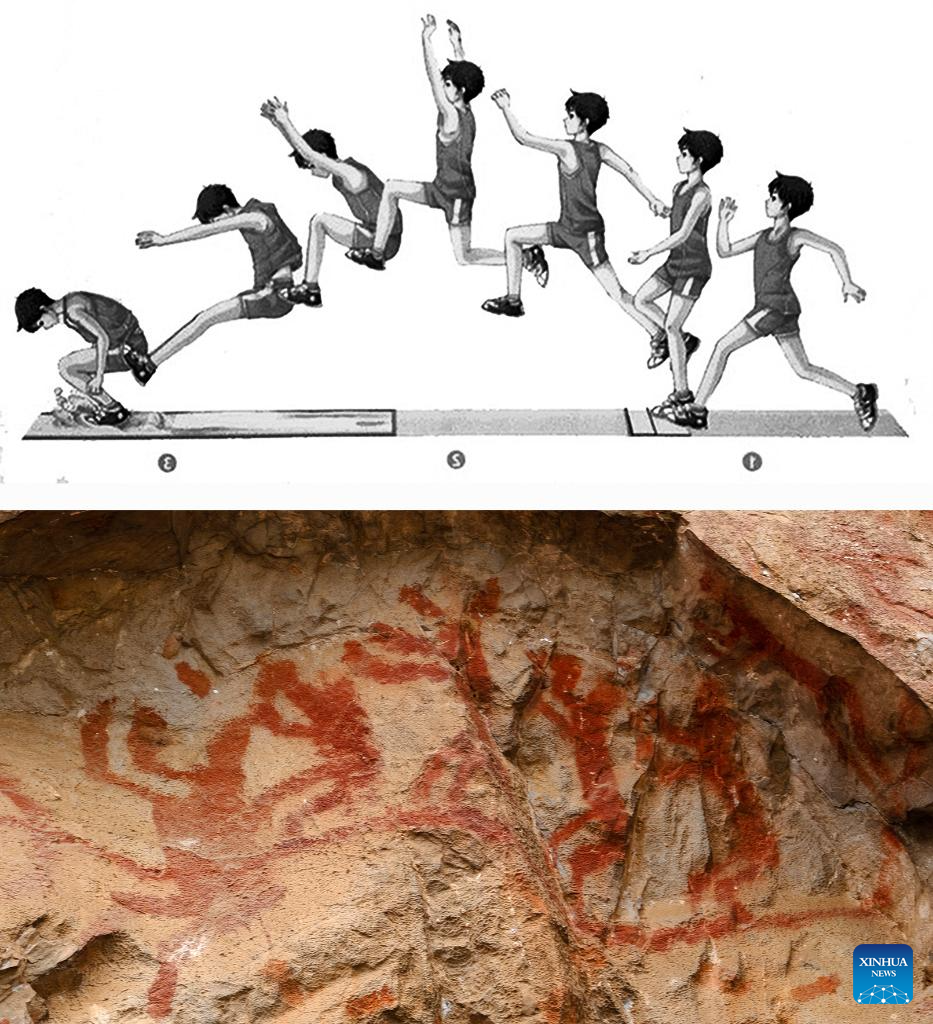
This combo photo shows a diagram (above) of the movements of jumping and a Huashan rock painting depicting jumping (photo taken by Xinhua photographer Fei Maohua on Aug. 8, 2023) in Ningming County, Chongzuo City, south China's Guangxi Zhuang Autonomous Region. The Zuojiang Huashan site is home to more than 1,900 well-preserved drawings on the face of the Huashan mountains along the Zuojiang River and its tributary Mingjiang River in Chongzuo.
The brownish red paintings, created from the Warring States Period (475-221 BC) to East Han Dynasty (25-220), depict the sacrifices of the Luoyue people, ancestors of today's Zhuang ethnic minority.
It is said that the major images of the paintings are frog-shaped people -- a totem of the Zhuang ethnic group. Some of those paintings also show sports scenes.
It remains a mystery how the Luoyue managed to paint on the rocks.
The group of rock paintings was included into UNESCO's world heritage list in 2016. (Xinhua)
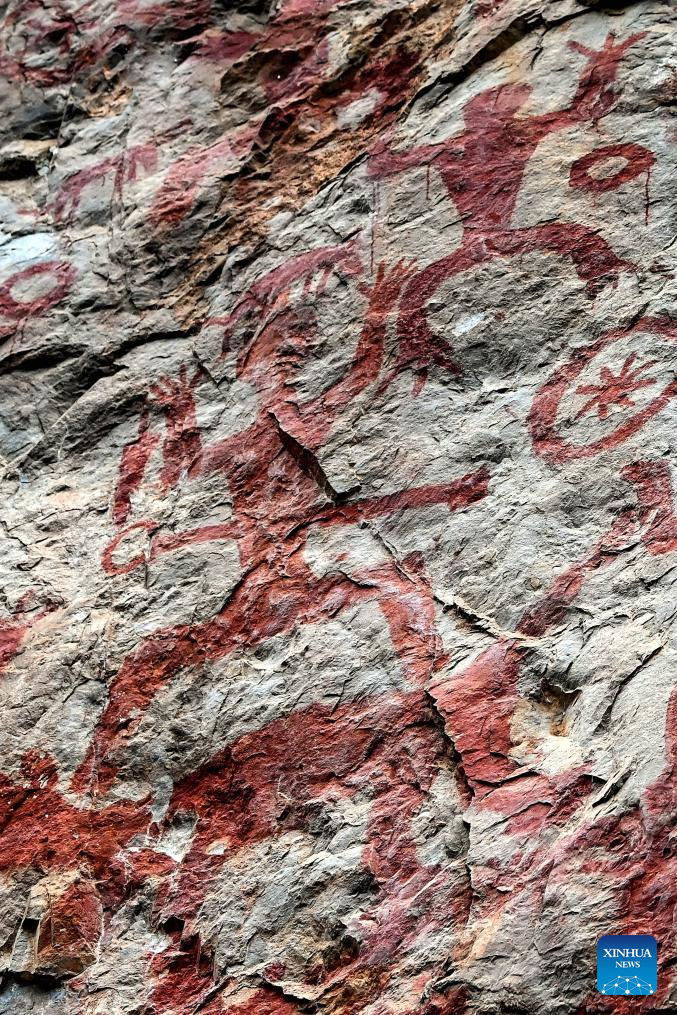
This photo taken on Aug. 8, 2023 shows a part of Huashan rock paintings in Ningming County, Chongzuo City, south China's Guangxi Zhuang Autonomous Region. The Zuojiang Huashan site is home to more than 1,900 well-preserved drawings on the face of the Huashan mountains along the Zuojiang River and its tributary Mingjiang River in Chongzuo.
The brownish red paintings, created from the Warring States Period (475-221 BC) to East Han Dynasty (25-220), depict the sacrifices of the Luoyue people, ancestors of today's Zhuang ethnic minority.
It is said that the major images of the paintings are frog-shaped people -- a totem of the Zhuang ethnic group. Some of those paintings also show sports scenes.
It remains a mystery how the Luoyue managed to paint on the rocks.
The group of rock paintings was included into UNESCO's world heritage list in 2016. (Xinhua/Zhang Ailin)
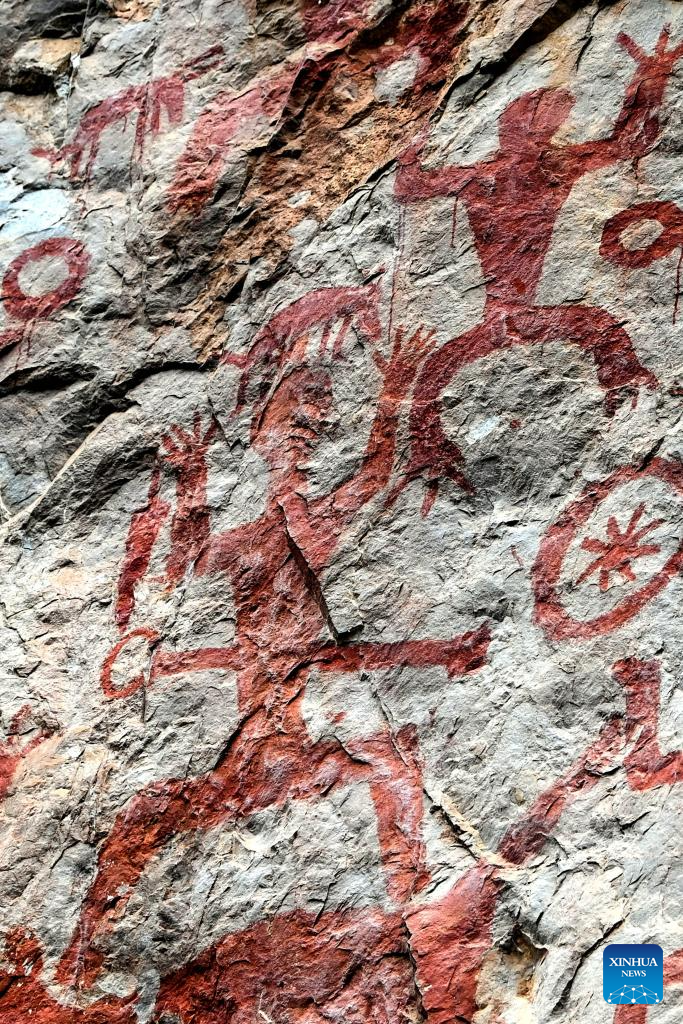
This photo taken on Aug. 8, 2023 shows a part of Huashan rock paintings depicting a ceremony in Ningming County, Chongzuo City, south China's Guangxi Zhuang Autonomous Region. The Zuojiang Huashan site is home to more than 1,900 well-preserved drawings on the face of the Huashan mountains along the Zuojiang River and its tributary Mingjiang River in Chongzuo.
The brownish red paintings, created from the Warring States Period (475-221 BC) to East Han Dynasty (25-220), depict the sacrifices of the Luoyue people, ancestors of today's Zhuang ethnic minority.
It is said that the major images of the paintings are frog-shaped people -- a totem of the Zhuang ethnic group. Some of those paintings also show sports scenes.
It remains a mystery how the Luoyue managed to paint on the rocks.
The group of rock paintings was included into UNESCO's world heritage list in 2016. (Xinhua/Zhang Ailin)
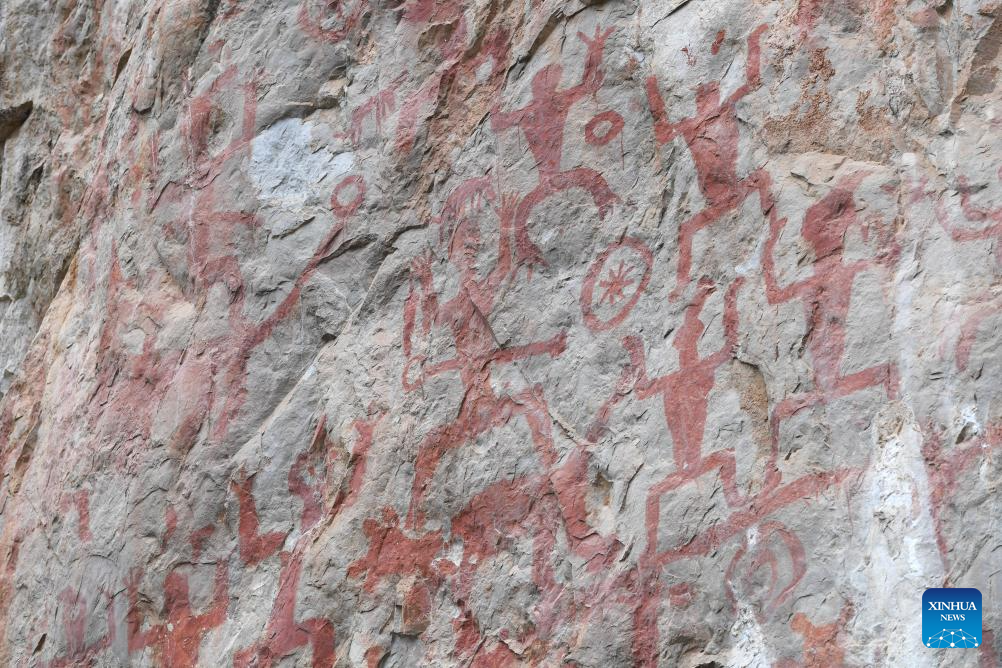
This photo taken on Aug. 8, 2023 shows a part of Huashan rock paintings in Ningming County, Chongzuo City, south China's Guangxi Zhuang Autonomous Region. The Zuojiang Huashan site is home to more than 1,900 well-preserved drawings on the face of the Huashan mountains along the Zuojiang River and its tributary Mingjiang River in Chongzuo.
The brownish red paintings, created from the Warring States Period (475-221 BC) to East Han Dynasty (25-220), depict the sacrifices of the Luoyue people, ancestors of today's Zhuang ethnic minority.
It is said that the major images of the paintings are frog-shaped people -- a totem of the Zhuang ethnic group. Some of those paintings also show sports scenes.
It remains a mystery how the Luoyue managed to paint on the rocks.
The group of rock paintings was included into UNESCO's world heritage list in 2016. (Xinhua/Zhou Hua)
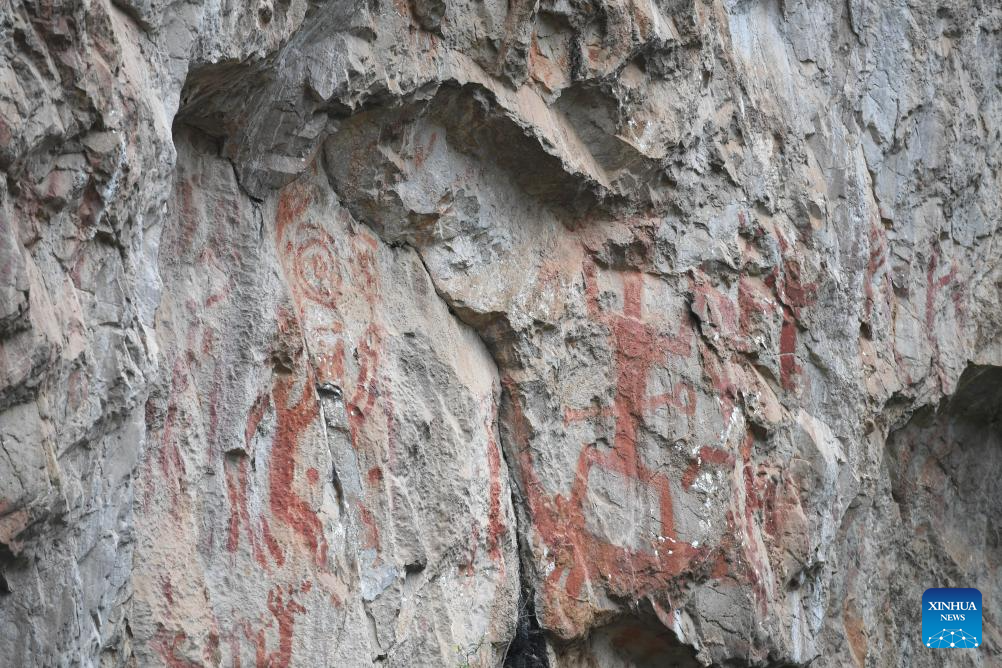
This photo taken on Aug. 8, 2023 shows a part of Huashan rock paintings in Ningming County, Chongzuo City, south China's Guangxi Zhuang Autonomous Region. The Zuojiang Huashan site is home to more than 1,900 well-preserved drawings on the face of the Huashan mountains along the Zuojiang River and its tributary Mingjiang River in Chongzuo.
The brownish red paintings, created from the Warring States Period (475-221 BC) to East Han Dynasty (25-220), depict the sacrifices of the Luoyue people, ancestors of today's Zhuang ethnic minority.
It is said that the major images of the paintings are frog-shaped people -- a totem of the Zhuang ethnic group. Some of those paintings also show sports scenes.
It remains a mystery how the Luoyue managed to paint on the rocks.
The group of rock paintings was included into UNESCO's world heritage list in 2016. (Xinhua/Zhou Hua)
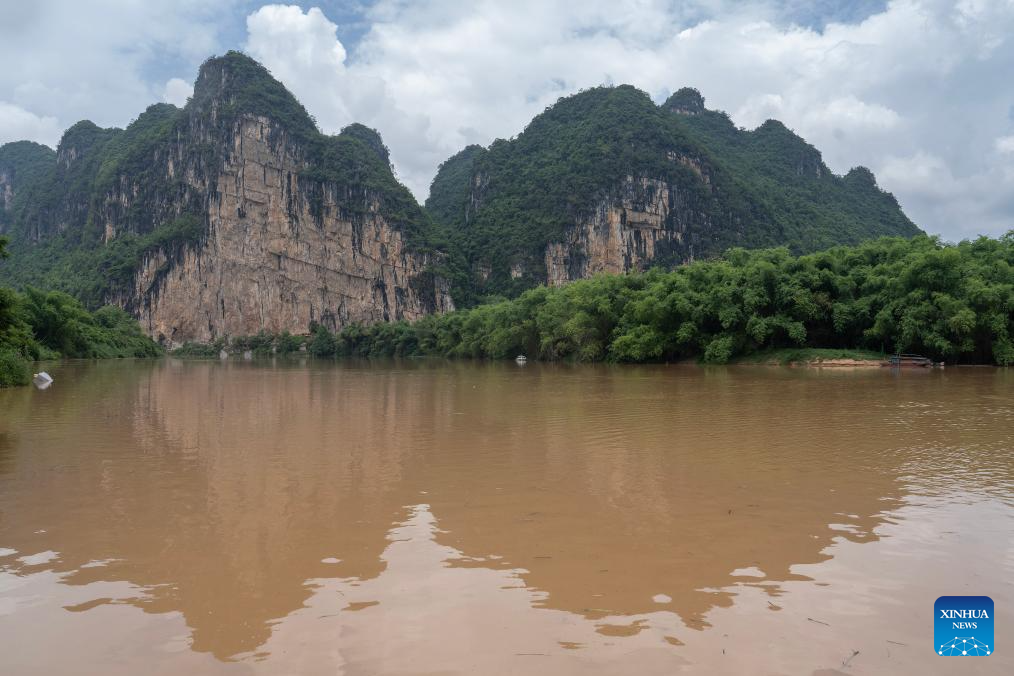
This photo taken on Aug. 8, 2023 shows Huashan mountains (L) in Chongzuo City, south China's Guangxi Zhuang Autonomous Region. The Zuojiang Huashan site is home to more than 1,900 well-preserved drawings on the face of the Huashan mountains along the Zuojiang River and its tributary Mingjiang River in Chongzuo.
The brownish red paintings, created from the Warring States Period (475-221 BC) to East Han Dynasty (25-220), depict the sacrifices of the Luoyue people, ancestors of today's Zhuang ethnic minority.
It is said that the major images of the paintings are frog-shaped people -- a totem of the Zhuang ethnic group. Some of those paintings also show sports scenes.
It remains a mystery how the Luoyue managed to paint on the rocks.
The group of rock paintings was included into UNESCO's world heritage list in 2016. (Xinhua/Fei Maohua)
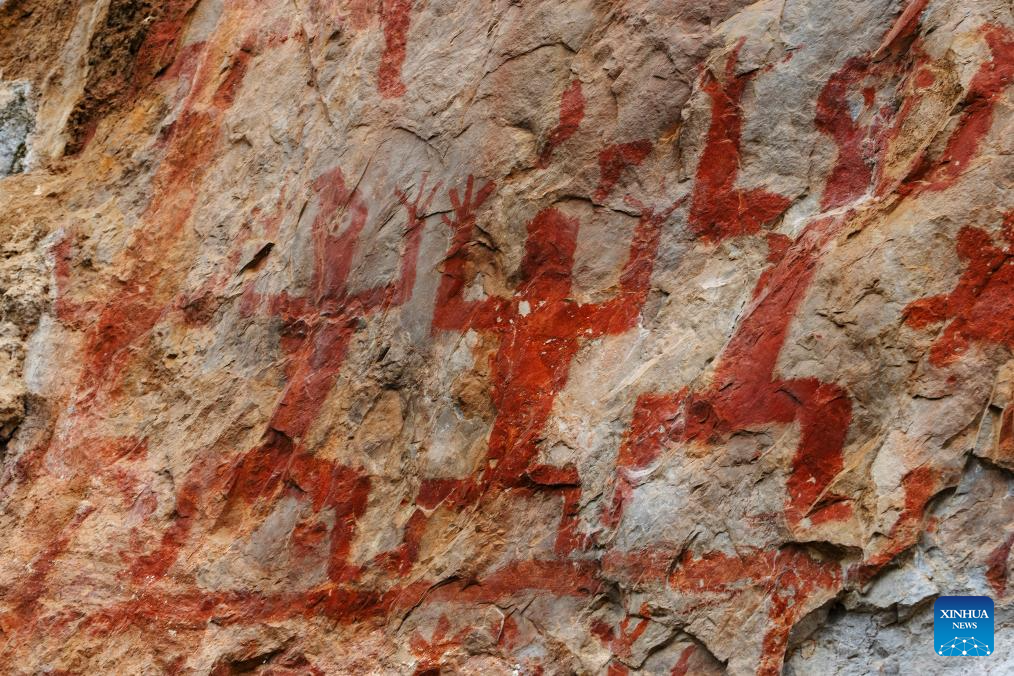
This photo taken on Aug. 8, 2023 shows a part of Huashan rock paintings in Ningming County, Chongzuo City, south China's Guangxi Zhuang Autonomous Region. The Zuojiang Huashan site is home to more than 1,900 well-preserved drawings on the face of the Huashan mountains along the Zuojiang River and its tributary Mingjiang River in Chongzuo.
The brownish red paintings, created from the Warring States Period (475-221 BC) to East Han Dynasty (25-220), depict the sacrifices of the Luoyue people, ancestors of today's Zhuang ethnic minority.
It is said that the major images of the paintings are frog-shaped people -- a totem of the Zhuang ethnic group. Some of those paintings also show sports scenes.
It remains a mystery how the Luoyue managed to paint on the rocks.
The group of rock paintings was included into UNESCO's world heritage list in 2016. (Xinhua/Fei Maohua)
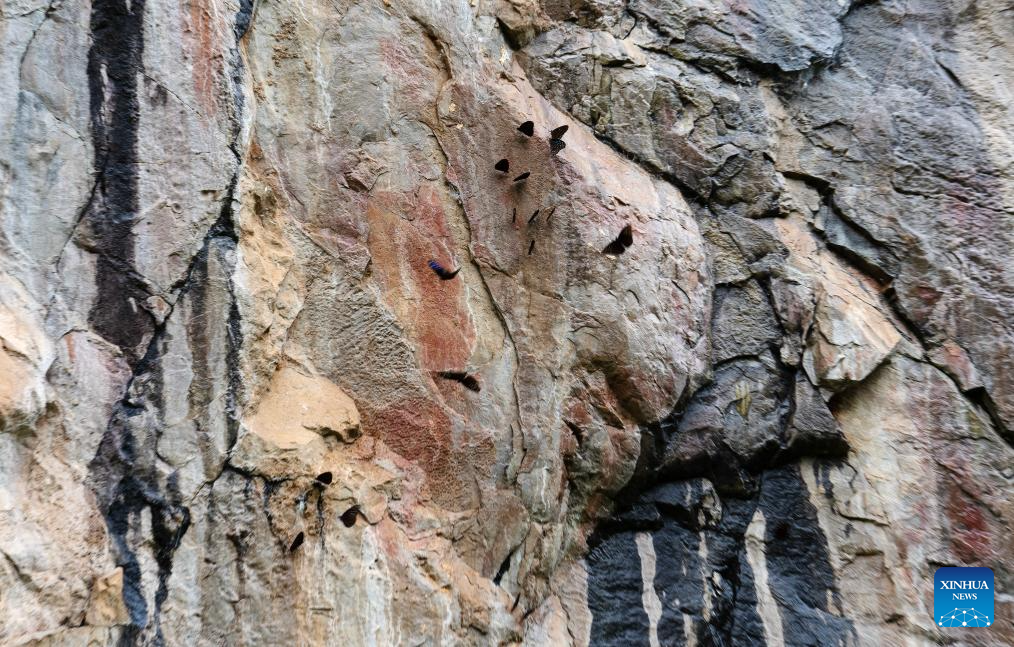
This photo taken on Aug. 8, 2023 shows butterflies on Huashan rock paintings in Ningming County, Chongzuo City, south China's Guangxi Zhuang Autonomous Region. The Zuojiang Huashan site is home to more than 1,900 well-preserved drawings on the face of the Huashan mountains along the Zuojiang River and its tributary Mingjiang River in Chongzuo.
The brownish red paintings, created from the Warring States Period (475-221 BC) to East Han Dynasty (25-220), depict the sacrifices of the Luoyue people, ancestors of today's Zhuang ethnic minority.
It is said that the major images of the paintings are frog-shaped people -- a totem of the Zhuang ethnic group. Some of those paintings also show sports scenes.
It remains a mystery how the Luoyue managed to paint on the rocks.
The group of rock paintings was included into UNESCO's world heritage list in 2016. (Xinhua/Fei Maohua)
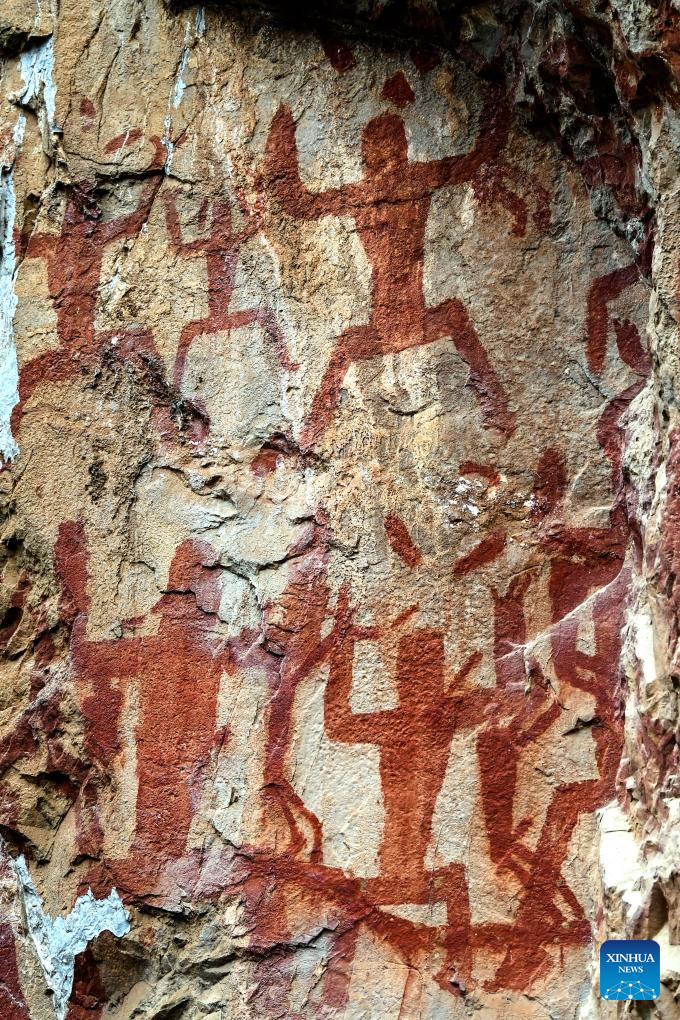
This photo taken on Aug. 8, 2023 shows a part of Huashan rock paintings in Ningming County, Chongzuo City, south China's Guangxi Zhuang Autonomous Region. The Zuojiang Huashan site is home to more than 1,900 well-preserved drawings on the face of the Huashan mountains along the Zuojiang River and its tributary Mingjiang River in Chongzuo.
The brownish red paintings, created from the Warring States Period (475-221 BC) to East Han Dynasty (25-220), depict the sacrifices of the Luoyue people, ancestors of today's Zhuang ethnic minority.
It is said that the major images of the paintings are frog-shaped people -- a totem of the Zhuang ethnic group. Some of those paintings also show sports scenes.
It remains a mystery how the Luoyue managed to paint on the rocks.
The group of rock paintings was included into UNESCO's world heritage list in 2016. (Xinhua/Zhang Ailin)
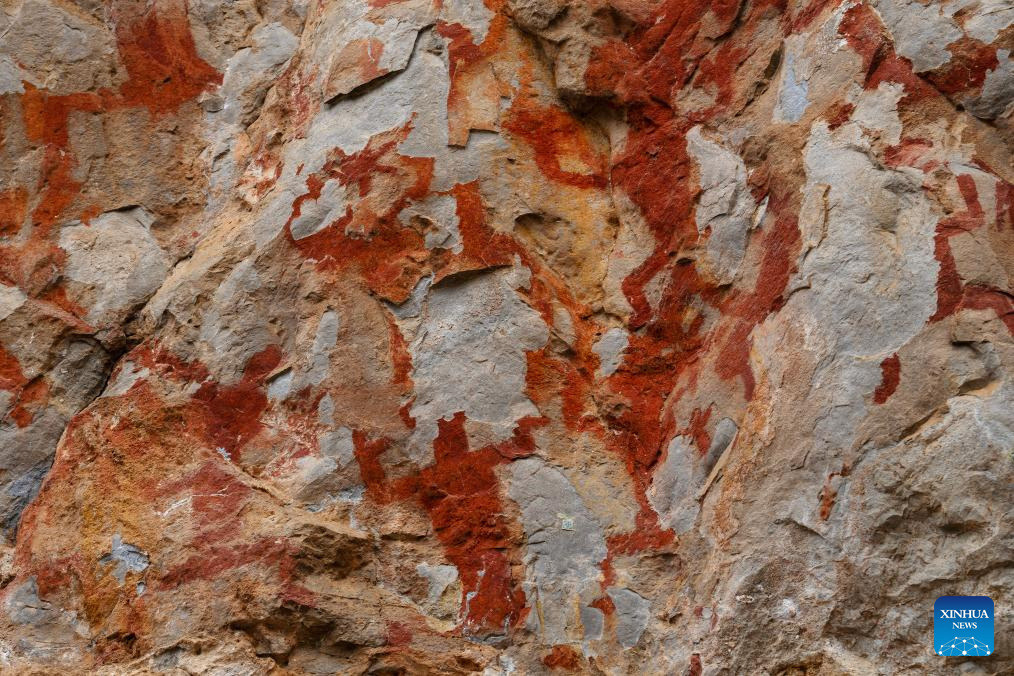
This photo taken on Aug. 8, 2023 shows a part of Huashan rock paintings in Ningming County, Chongzuo City, south China's Guangxi Zhuang Autonomous Region. The Zuojiang Huashan site is home to more than 1,900 well-preserved drawings on the face of the Huashan mountains along the Zuojiang River and its tributary Mingjiang River in Chongzuo.
The brownish red paintings, created from the Warring States Period (475-221 BC) to East Han Dynasty (25-220), depict the sacrifices of the Luoyue people, ancestors of today's Zhuang ethnic minority.
It is said that the major images of the paintings are frog-shaped people -- a totem of the Zhuang ethnic group. Some of those paintings also show sports scenes.
It remains a mystery how the Luoyue managed to paint on the rocks.
The group of rock paintings was included into UNESCO's world heritage list in 2016. (Xinhua/Fei Maohua)
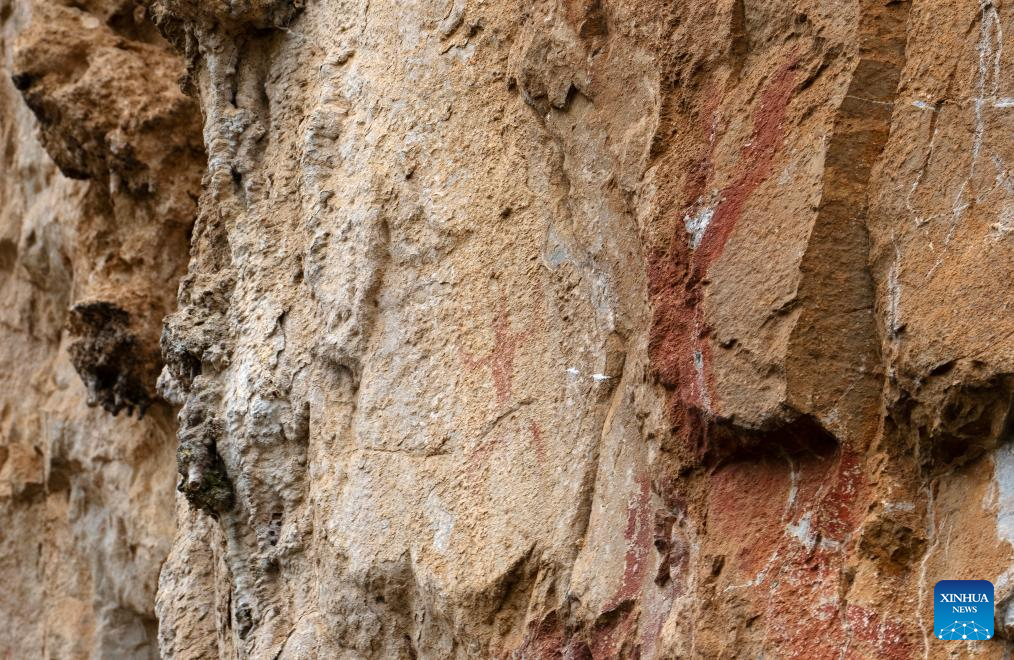
This photo taken on Aug. 8, 2023 shows a rock painting with a height of about 20 centimeters, the smallest one of Huashan rock paintings, in Ningming County, Chongzuo City, south China's Guangxi Zhuang Autonomous Region. The Zuojiang Huashan site is home to more than 1,900 well-preserved drawings on the face of the Huashan mountains along the Zuojiang River and its tributary Mingjiang River in Chongzuo.
The brownish red paintings, created from the Warring States Period (475-221 BC) to East Han Dynasty (25-220), depict the sacrifices of the Luoyue people, ancestors of today's Zhuang ethnic minority.
It is said that the major images of the paintings are frog-shaped people -- a totem of the Zhuang ethnic group. Some of those paintings also show sports scenes.
It remains a mystery how the Luoyue managed to paint on the rocks.
The group of rock paintings was included into UNESCO's world heritage list in 2016. (Xinhua/Fei Maohua)
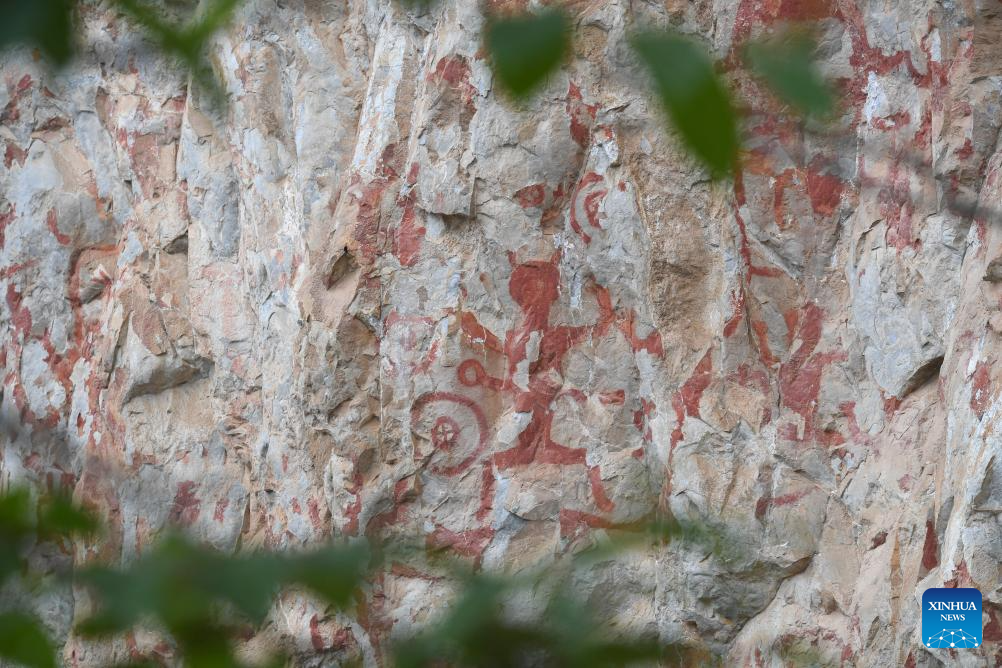
This photo taken on Aug. 8, 2023 shows a part of Huashan rock paintings in Ningming County, Chongzuo City, south China's Guangxi Zhuang Autonomous Region. The Zuojiang Huashan site is home to more than 1,900 well-preserved drawings on the face of the Huashan mountains along the Zuojiang River and its tributary Mingjiang River in Chongzuo.
The brownish red paintings, created from the Warring States Period (475-221 BC) to East Han Dynasty (25-220), depict the sacrifices of the Luoyue people, ancestors of today's Zhuang ethnic minority.
It is said that the major images of the paintings are frog-shaped people -- a totem of the Zhuang ethnic group. Some of those paintings also show sports scenes.
It remains a mystery how the Luoyue managed to paint on the rocks.
The group of rock paintings was included into UNESCO's world heritage list in 2016. (Xinhua/Zhou Hua)
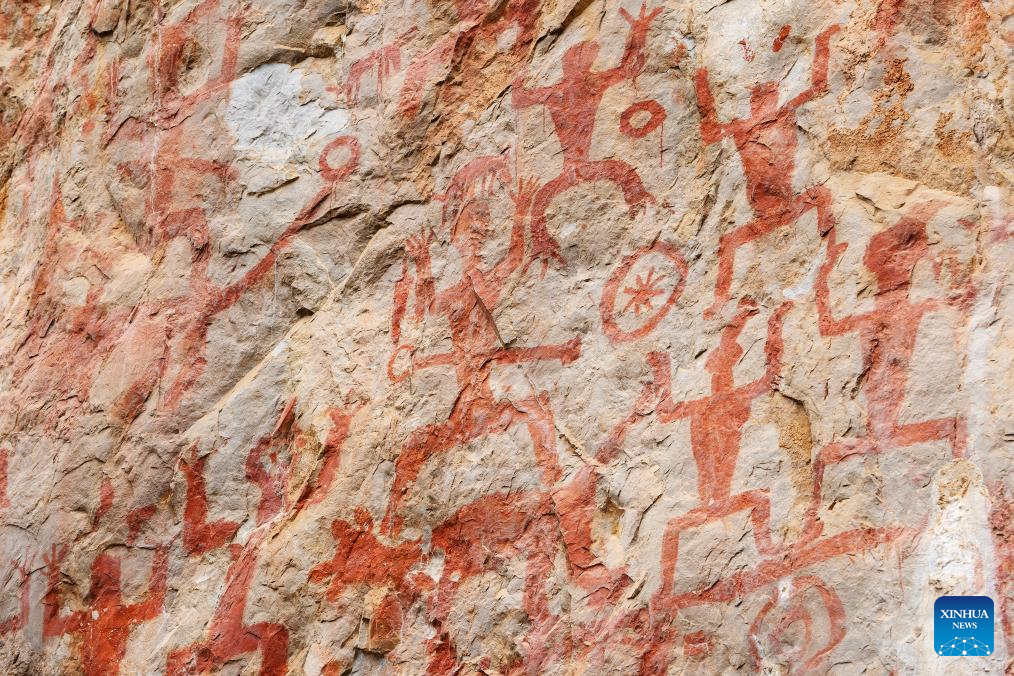
This photo taken on Aug. 8, 2023 shows a part of Huashan rock paintings in Ningming County, Chongzuo City, south China's Guangxi Zhuang Autonomous Region. The Zuojiang Huashan site is home to more than 1,900 well-preserved drawings on the face of the Huashan mountains along the Zuojiang River and its tributary Mingjiang River in Chongzuo.
The brownish red paintings, created from the Warring States Period (475-221 BC) to East Han Dynasty (25-220), depict the sacrifices of the Luoyue people, ancestors of today's Zhuang ethnic minority.
It is said that the major images of the paintings are frog-shaped people -- a totem of the Zhuang ethnic group. Some of those paintings also show sports scenes.
It remains a mystery how the Luoyue managed to paint on the rocks.
The group of rock paintings was included into UNESCO's world heritage list in 2016. (Xinhua/Fei Maohua)
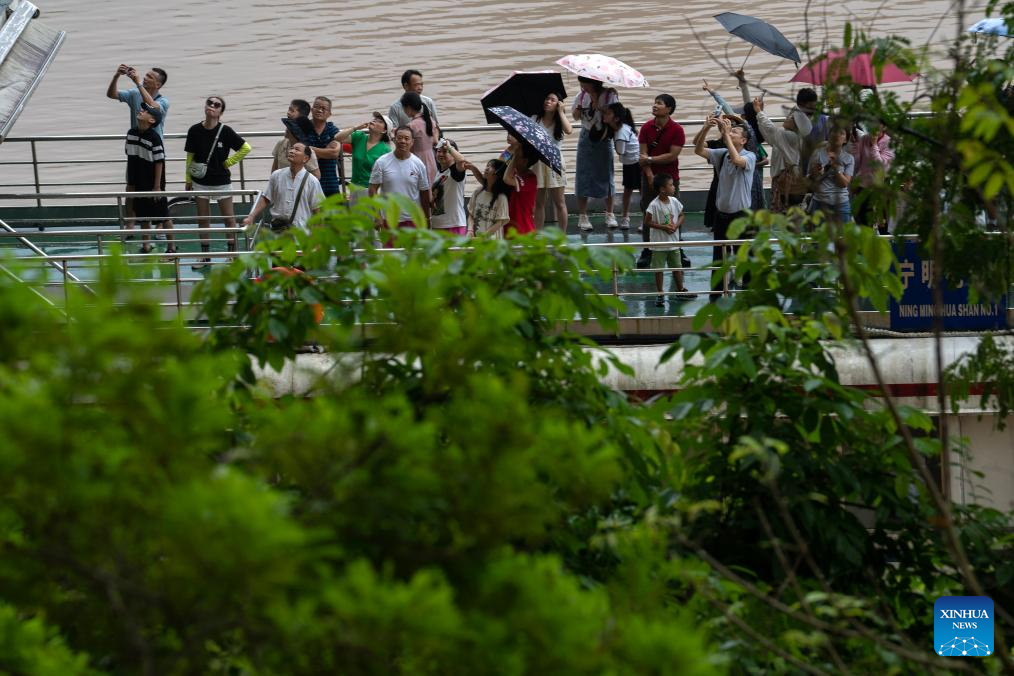
Tourists look at Huashan rock paintings in Ningming County, Chongzuo City, south China's Guangxi Zhuang Autonomous Region, Aug. 8, 2023. The Zuojiang Huashan site is home to more than 1,900 well-preserved drawings on the face of the Huashan mountains along the Zuojiang River and its tributary Mingjiang River in Chongzuo.
The brownish red paintings, created from the Warring States Period (475-221 BC) to East Han Dynasty (25-220), depict the sacrifices of the Luoyue people, ancestors of today's Zhuang ethnic minority.
It is said that the major images of the paintings are frog-shaped people -- a totem of the Zhuang ethnic group. Some of those paintings also show sports scenes.
It remains a mystery how the Luoyue managed to paint on the rocks.
The group of rock paintings was included into UNESCO's world heritage list in 2016. (Xinhua/Fei Maohua)
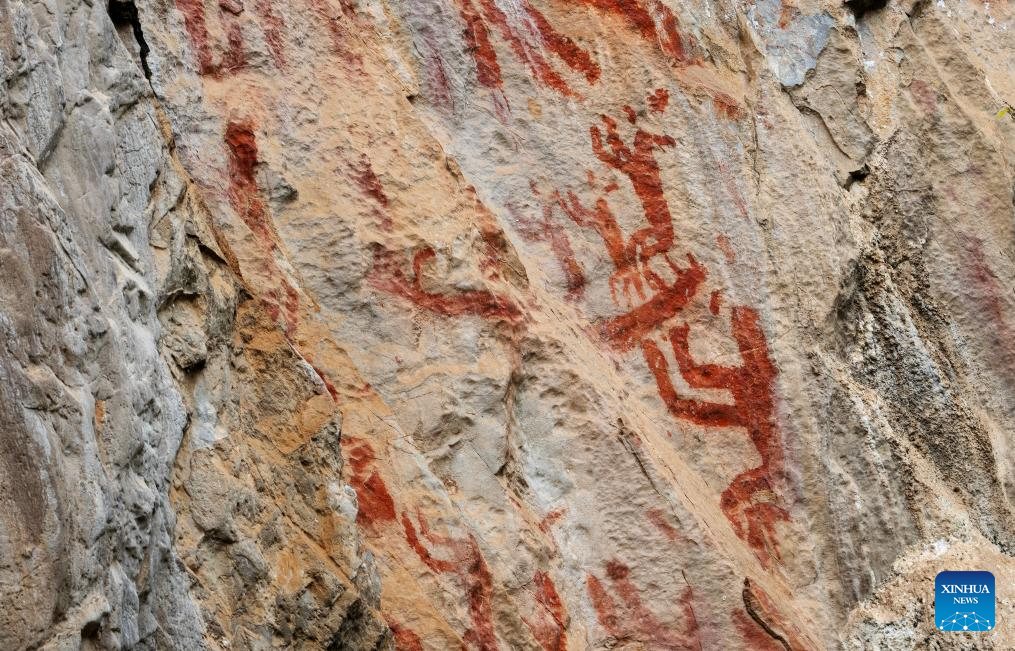
This photo taken on Aug. 8, 2023 shows a part of Huashan rock paintings depicting people sailing on a boat in Ningming County, Chongzuo City, south China's Guangxi Zhuang Autonomous Region. The Zuojiang Huashan site is home to more than 1,900 well-preserved drawings on the face of the Huashan mountains along the Zuojiang River and its tributary Mingjiang River in Chongzuo.
The brownish red paintings, created from the Warring States Period (475-221 BC) to East Han Dynasty (25-220), depict the sacrifices of the Luoyue people, ancestors of today's Zhuang ethnic minority.
It is said that the major images of the paintings are frog-shaped people -- a totem of the Zhuang ethnic group. Some of those paintings also show sports scenes.
It remains a mystery how the Luoyue managed to paint on the rocks.
The group of rock paintings was included into UNESCO's world heritage list in 2016. (Xinhua/Fei Maohua)
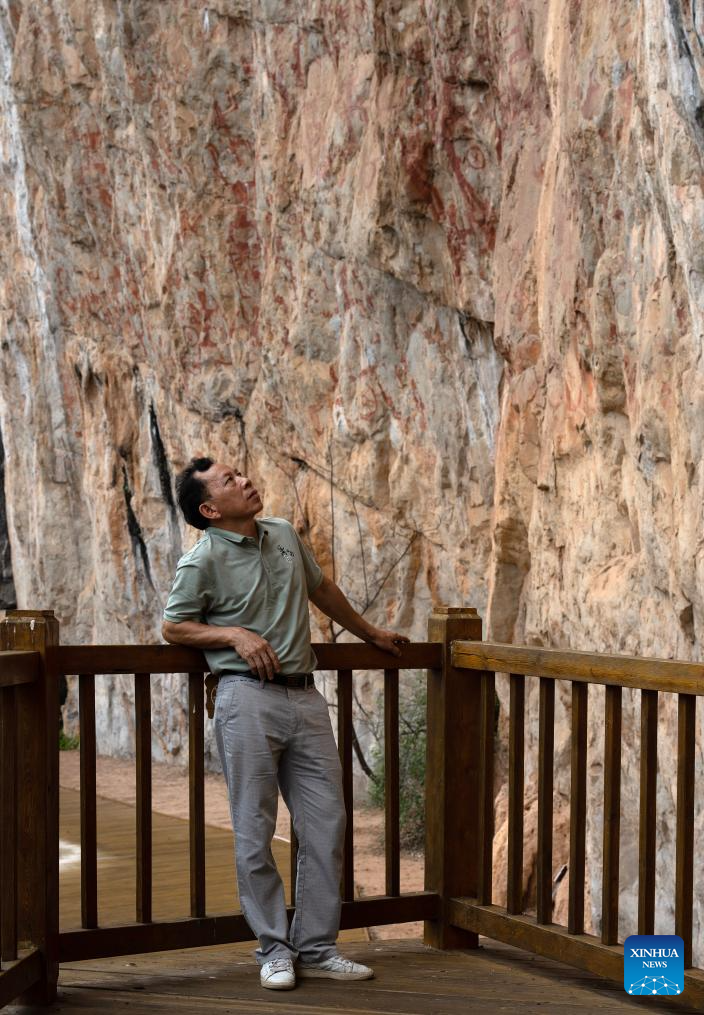
Zhu Qiuping, a cultural relics protection expert, contemplates Huashan rock paintings in Ningming County, Chongzuo City, south China's Guangxi Zhuang Autonomous Region, Aug. 8, 2023. The Zuojiang Huashan site is home to more than 1,900 well-preserved drawings on the face of the Huashan mountains along the Zuojiang River and its tributary Mingjiang River in Chongzuo.
The brownish red paintings, created from the Warring States Period (475-221 BC) to East Han Dynasty (25-220), depict the sacrifices of the Luoyue people, ancestors of today's Zhuang ethnic minority.
It is said that the major images of the paintings are frog-shaped people -- a totem of the Zhuang ethnic group. Some of those paintings also show sports scenes.
It remains a mystery how the Luoyue managed to paint on the rocks.
The group of rock paintings was included into UNESCO's world heritage list in 2016. (Xinhua/Fei Maohua)
