* One of the 12 manors in old Ti bet, Palha Manor in Gyangze County in the city of Xigaze, southwest China's Ti bet Autonomous Region, is the only one still standing and functioning as a museum.
* On March 28, 1959, people in T ibet launched a democratic reform that ended the region's feudal serfdom. In 2009, the regional legislature announced March 28 as a day to commemorate the emancipation of about 1 million serfs.
* As the manor, with 57 rooms covering a combined floor area of over 5,000 square meters, has become a protected site of the state, one can intuitively feel the luxurious life of the masters and the tragic fate of serfs.
* In the past 64 years, Ti bet has progressed from poverty to prosperity and from autocracy to democracy. The regional GDP reached 213.3 billion yuan (about 31 billion U.S. dollars) in 2022, representing a giant leap from the 1959 figure of a mere 174 million yuan.
LHASA, March 28 (Xinhua) -- A serf went down on his hands and knees so the master could step onto his back to mount a horse; a serf's child, dying of starvation, was given a good beating for being caught stealing food... What happened in an aristocratic manor in southwest China's Ti bet Autonomous Region revealed the miserable lives of serfs decades ago.
One of the 12 manors in old Ti bet, Palha Manor in Gyangze County in the city of Xigaze is the only one still standing and functioning as a museum.
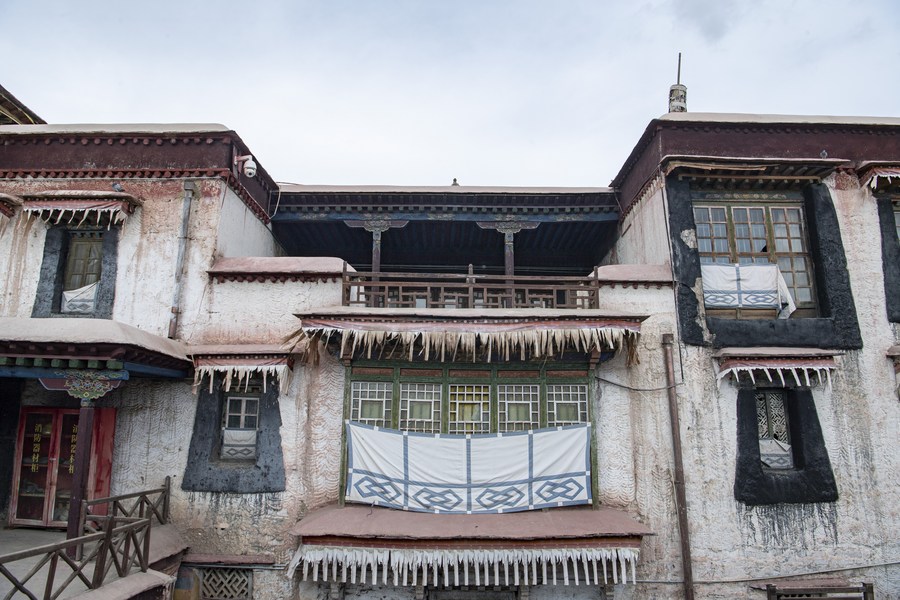
This photo taken on March 20, 2023 shows the former site of Palha Manor, one of the 12 manors in old Ti bet, in Gyangze County in Xigaze, southwest China's Ti bet Autonomous Region. (Xinhua/Sun Fei)
"The manor was a hell for serfs and a paradise for the masters," recalled Norbu Tsering, 79, son of a serf in the manor.
On March 28, 1959, people in Ti bet launched a democratic reform that ended the region's feudal serfdom. In 2009, the regional legislature announced March 28 as a day to commemorate the emancipation of about 1 million serfs.
RIGID HIERARCHY
Following the democratic reform in 1959, the Palha family fled overseas, deserting the manor.
As the manor, with 57 rooms covering a combined floor area of over 5,000 square meters, has become a protected site of the state, one can intuitively feel the luxurious life of the masters and the tragic fate of serfs.
Louis Vuitton handbag, Omega watch, Montblanc pen, Scotch whisky, Indian cigarettes, and an ivory mahjong set -- those on display were daily items for the Palha family in the 1950s.
There was even a modern gymnasium that stored ping-pong balls, badminton racquets, footballs, and ice skates -- luxuries that were rare nearly a century ago.
In the exhibition room on the third floor, there were instruments of torture, such as leather whips, laths and shackles, to punish serfs. Also displayed are trumpets that are made from young virgins' shinbones for ritual purposes and barley wine cups made of human skulls. The serf owner even built two cells and a cave that contained scorpions, where serfs who dared cause trouble were thrown.
A shocking first-hand account of the cruelty of the manor has been given by late Jewish journalist and writer Israel Epstein in his 1983 book "Ti bet Transformed."
"Women slaves could not give birth in the manor house or its outbuildings, but only outdoors. If three days after childbirth they were not back at work, they were beaten or locked up in the Palhas' private jail. Sick slaves were 'forbidden to die' on the mansion grounds but had to crawl or be carried outside," he wrote.
Before 1959, the average life expectancy in Ti bet was only 35.5 years. The figure rose to 72.19 years in 2021.
"About 95 percent of old Ti bet's population was made up of serfs. They had no means of production or personal freedom and only lived on tilling plots or serving estate holders for survival. The rest 5 percent -- officials, nobles, and monks at the upper level of monasteries -- lived a fairy-like life," said tourist guide Phurbu Tsering, whose mother used to be a serf weaving carpets for the family.
EARTH-SHAKING CHANGES
In the past 64 years, T ibet has progressed from poverty to prosperity and from autocracy to democracy. The regional GDP reached 213.3 billion yuan (about 31 billion U.S. dollars) in 2022, representing a giant leap from the 1959 figure of a mere 174 million yuan. The average per capita disposable income of Ti bet's residents was 26,675 yuan in 2022, up 6.91 percent year on year in nominal terms.
"Life has undergone earth-shaking changes, which is a world away from the past," said Norbu Tsering, whose family was given land, livestock, and production tools following the democratic reform.
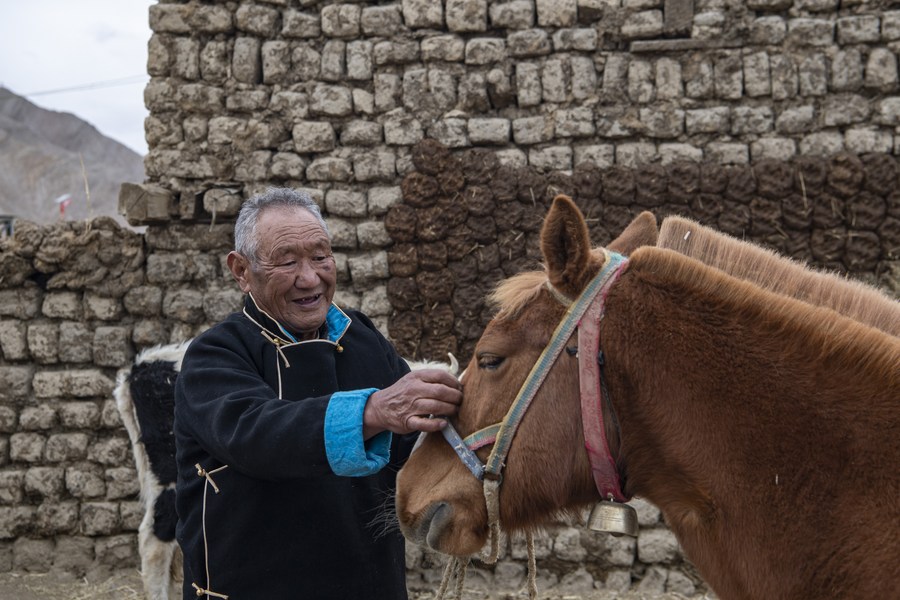
Norbu Tsering feeds a horse at home in Gyangze County in Xigaze, southwest China's Ti bet Autonomous Region, March 20, 2023. (Xinhua/Sun Fei)
The serfs of Palha Manor built houses nearby and made a village named Bainjig Lhunbo, where concrete roads and Ti betan-style two-story buildings have been in place.
Norbu Tsering lives in one of the buildings covering a floor area of over 500 square meters. Apart from the farming income from their 2-hectare field, his family has a dumper truck serving construction sites. Among his three grandchildren, the oldest is in university, with the other two receiving free education in senior high and elementary school.
Ti bet is the first provincial-level region in China to provide 15 years of publicly funded education, from kindergarten all the way up to senior high school. By contrast, there was not a single proper school, and the illiteracy rate among young people exceeded 95 percent in old Ti bet.
The changes in Ti bet are a vivid epitome of China's reform and development. Chinese modernization is the only correct choice for building a strong country and advancing national rejuvenation, said Yan Jinhai, head of the regional government, in a speech marking the historical movement that ended serfdom in Ti bet 64 years ago.
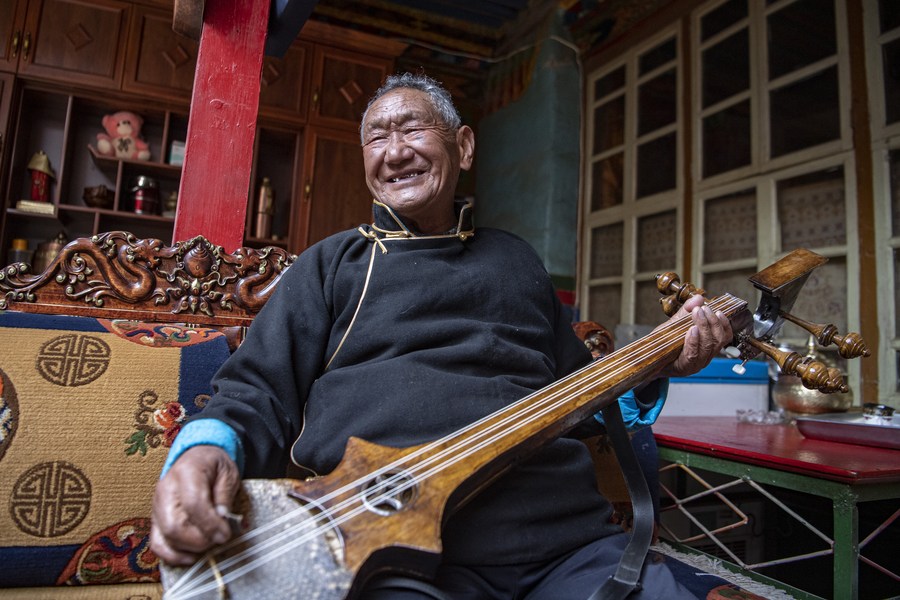
Norbu Tsering plays the Zhanian musical instrument at home in Gyangze County in Xigaze, southwest China's Ti bet Autonomous Region, March 20, 2023. (Xinhua/Sun Fei)
In the past 10 years, Yan said, Ti bet has achieved high-quality development, maintained rapid economic growth, and heavily invested in education, medical care, culture, housing, employment, and social security. Ti bet has shaken off absolute poverty and kept on pace with the whole country in building a moderately prosperous society in all respects.
"My wish now is to live longer and enjoy the life I currently have," Norbu Tsering said. (Video reporters: Cao Bin, Tenzing Nima Qadhup, Sun Fei; video editors: Miao Zhuang, Mu Xuyao, Hong Yan) -
| 全面深改围绕六大领域立柱架梁夯制度 深刻改变中国 2016-12-29 | |
| 全面深改三年:渐入佳境 次第开花 2016-12-29 | |
| 【深读深改】架梁立柱夯制度 改革进入施工高峰期 2016-12-29 | |
| 【2016年商务工作年终综述之一】深化流通供给侧改革 加快现代市场体系建设 2016-12-19 |
