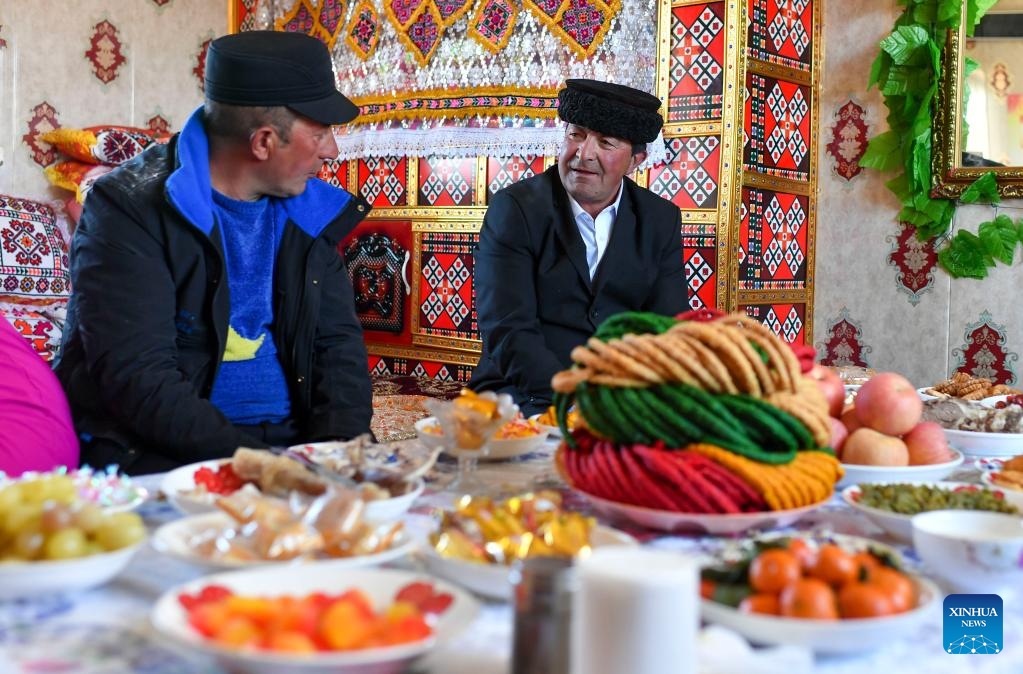
Duri Jarman (R) talks with his younger brother who also lives in Aimin Village of Taxkorgan Tajik Autonomous County, northwest China's Xinjiang Uygur Autonomous Region, March 21, 2023.
The life of herdsman Duri Jarman is closely tied to two places: the village of Ak Toga Langar, nestled deep in the mountains of Taxkorgan Tajik Autonomous County, and Aimin Village, located near the county seat.
Duri, now 52 years old, spent 47 years living in Ak Toga Langar Village. In the winter of 2018, his family benefited from the relocation policy for poverty alleviation and settled in Aimin Village.
There, they gradually adapted to the changes, enjoying a new life different from that of their ancestors. Duri and his youngest son, Nurkerim, opened a small shop, while both his eldest and second sons found new jobs. The village committee led the villagers in transforming barren land, leveling it, and repairing ditches. Duri's family was allotted 10 mu (0.67 hectares) of land, which they used to grow forage grass.
After roads are improved, Duri's family opted for a modern means of transport instead of camels. Nurkerim has also bought a pickup truck which he uses to run a transport service from the county seat to the village and from the county seat to the Kashgar city area.
As spring arrives, Duri's family and their fellow villagers are celebrating the Noruz Festival, which is observed by various ethnic groups in Xinjiang. They are immersed in the joy of a better life. (Xinhua/Hu Huhu)
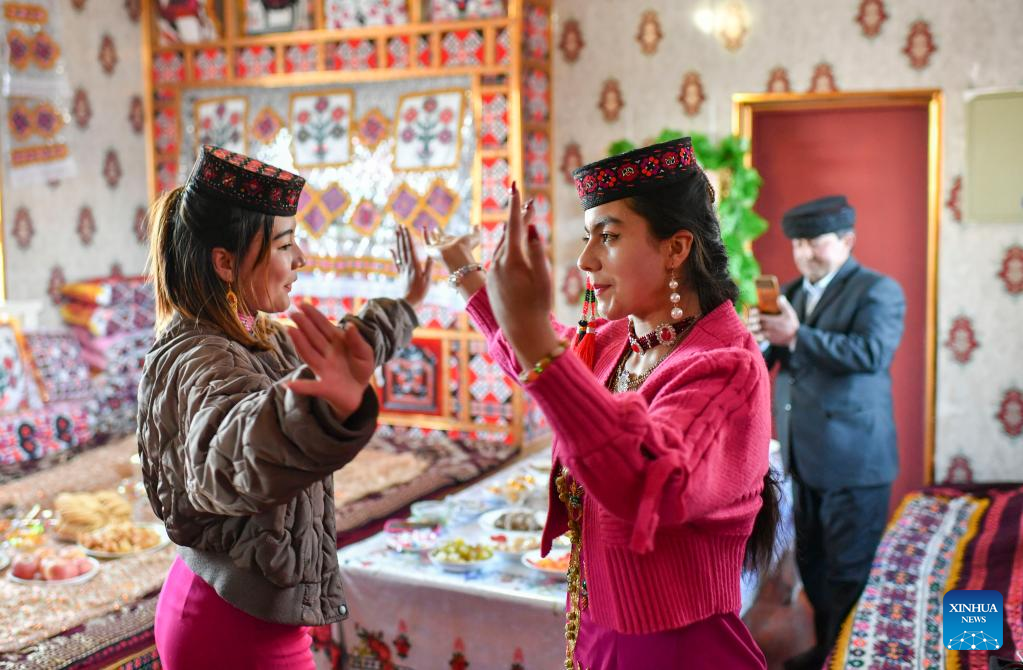
Gvzalnur (R, front), niece of Duri Jarman, dances with her friend at Duri's home in Aimin Village of Taxkorgan Tajik Autonomous County, northwest China's Xinjiang Uygur Autonomous Region, March 21, 2023. The life of herdsman Duri Jarman is closely tied to two places: the village of Ak Toga Langar, nestled deep in the mountains of Taxkorgan Tajik Autonomous County, and Aimin Village, located near the county seat.
Duri, now 52 years old, spent 47 years living in Ak Toga Langar Village. In the winter of 2018, his family benefited from the relocation policy for poverty alleviation and settled in Aimin Village.
There, they gradually adapted to the changes, enjoying a new life different from that of their ancestors. Duri and his youngest son, Nurkerim, opened a small shop, while both his eldest and second sons found new jobs. The village committee led the villagers in transforming barren land, leveling it, and repairing ditches. Duri's family was allotted 10 mu (0.67 hectares) of land, which they used to grow forage grass.
After roads are improved, Duri's family opted for a modern means of transport instead of camels. Nurkerim has also bought a pickup truck which he uses to run a transport service from the county seat to the village and from the county seat to the Kashgar city area.
As spring arrives, Duri's family and their fellow villagers are celebrating the Noruz Festival, which is observed by various ethnic groups in Xinjiang. They are immersed in the joy of a better life. (Xinhua/Hu Huhu)
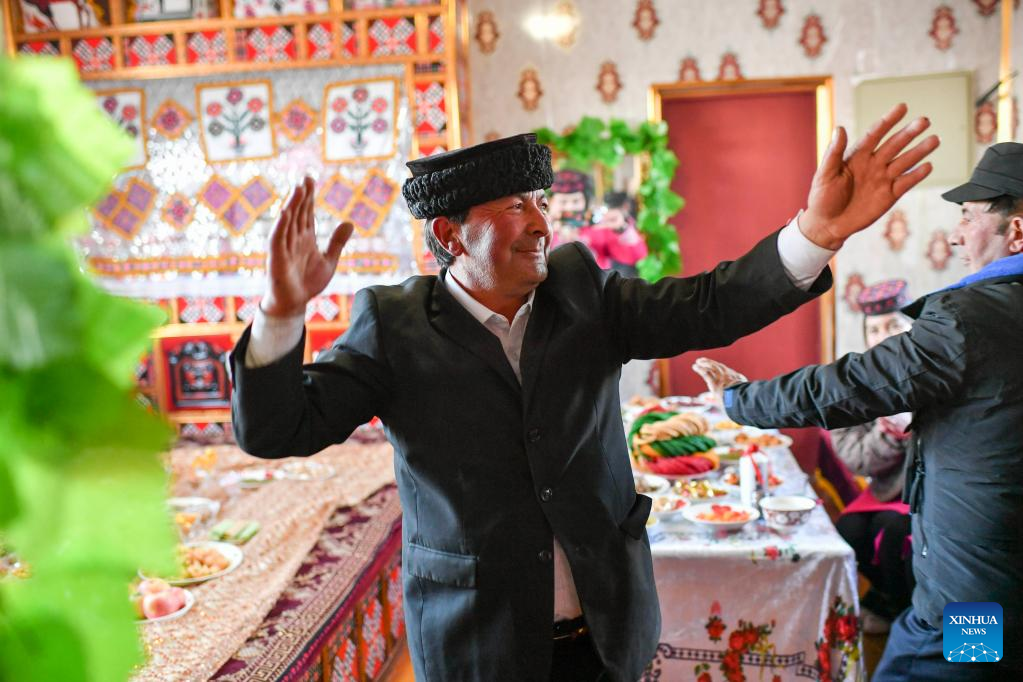
Duri Jarman dances to celebrate the Noruz Festival at his home in Aimin Village of Taxkorgan Tajik Autonomous County, northwest China's Xinjiang Uygur Autonomous Region, March 21, 2023.
The life of herdsman Duri Jarman is closely tied to two places: the village of Ak Toga Langar, nestled deep in the mountains of Taxkorgan Tajik Autonomous County, and Aimin Village, located near the county seat.
Duri, now 52 years old, spent 47 years living in Ak Toga Langar Village. In the winter of 2018, his family benefited from the relocation policy for poverty alleviation and settled in Aimin Village.
There, they gradually adapted to the changes, enjoying a new life different from that of their ancestors. Duri and his youngest son, Nurkerim, opened a small shop, while both his eldest and second sons found new jobs. The village committee led the villagers in transforming barren land, leveling it, and repairing ditches. Duri's family was allotted 10 mu (0.67 hectares) of land, which they used to grow forage grass.
After roads are improved, Duri's family opted for a modern means of transport instead of camels. Nurkerim has also bought a pickup truck which he uses to run a transport service from the county seat to the village and from the county seat to the Kashgar city area.
As spring arrives, Duri's family and their fellow villagers are celebrating the Noruz Festival, which is observed by various ethnic groups in Xinjiang. They are immersed in the joy of a better life. (Xinhua/Hu Huhu)
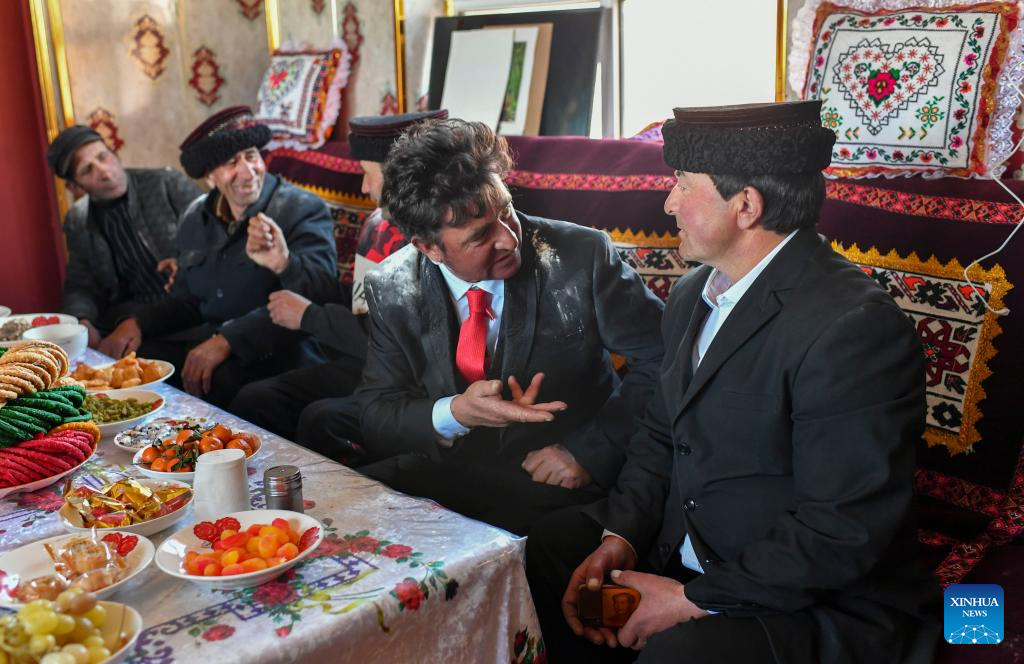
Duri Jarman (1st R) talks with friends at his home in Aimin Village of Taxkorgan Tajik Autonomous County, northwest China's Xinjiang Uygur Autonomous Region, March 21, 2023.
The life of herdsman Duri Jarman is closely tied to two places: the village of Ak Toga Langar, nestled deep in the mountains of Taxkorgan Tajik Autonomous County, and Aimin Village, located near the county seat.
Duri, now 52 years old, spent 47 years living in Ak Toga Langar Village. In the winter of 2018, his family benefited from the relocation policy for poverty alleviation and settled in Aimin Village.
There, they gradually adapted to the changes, enjoying a new life different from that of their ancestors. Duri and his youngest son, Nurkerim, opened a small shop, while both his eldest and second sons found new jobs. The village committee led the villagers in transforming barren land, leveling it, and repairing ditches. Duri's family was allotted 10 mu (0.67 hectares) of land, which they used to grow forage grass.
After roads are improved, Duri's family opted for a modern means of transport instead of camels. Nurkerim has also bought a pickup truck which he uses to run a transport service from the county seat to the village and from the county seat to the Kashgar city area.
As spring arrives, Duri's family and their fellow villagers are celebrating the Noruz Festival, which is observed by various ethnic groups in Xinjiang. They are immersed in the joy of a better life. (Xinhua/Hu Huhu)
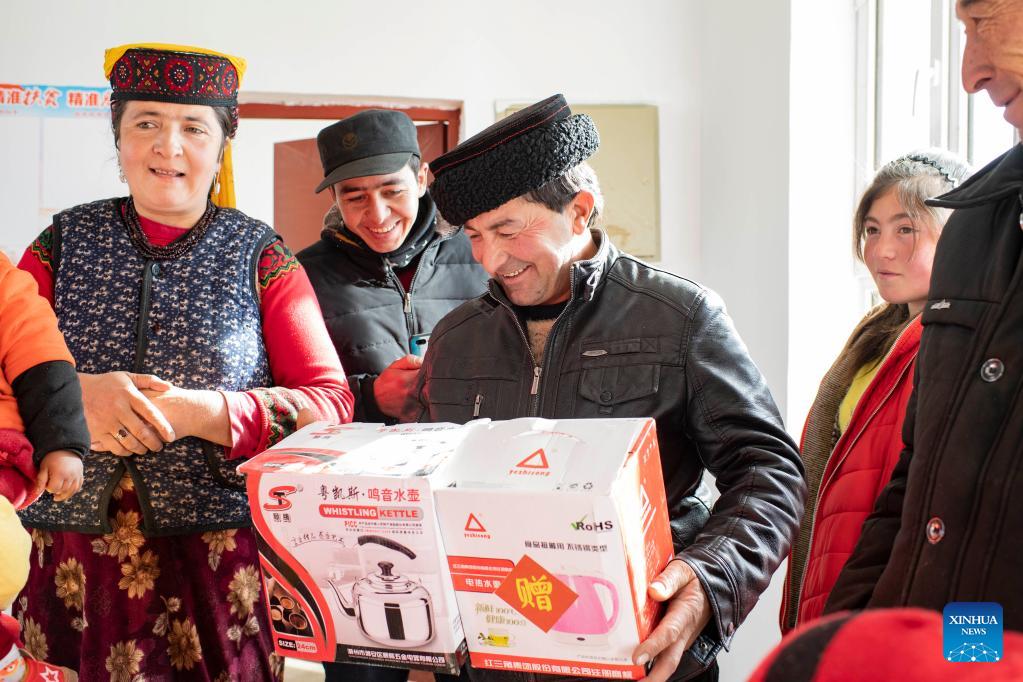
Neighbors offer their blessings as Duri Jarman relocates to his new home in Aimin Village of Taxkorgan Tajik Autonomous County, northwest China's Xinjiang Uygur Autonomous Region, Nov. 18, 2018.
The life of herdsman Duri Jarman is closely tied to two places: the village of Ak Toga Langar, nestled deep in the mountains of Taxkorgan Tajik Autonomous County, and Aimin Village, located near the county seat.
Duri, now 52 years old, spent 47 years living in Ak Toga Langar Village. In the winter of 2018, his family benefited from the relocation policy for poverty alleviation and settled in Aimin Village.
There, they gradually adapted to the changes, enjoying a new life different from that of their ancestors. Duri and his youngest son, Nurkerim, opened a small shop, while both his eldest and second sons found new jobs. The village committee led the villagers in transforming barren land, leveling it, and repairing ditches. Duri's family was allotted 10 mu (0.67 hectares) of land, which they used to grow forage grass.
After roads are improved, Duri's family opted for a modern means of transport instead of camels. Nurkerim has also bought a pickup truck which he uses to run a transport service from the county seat to the village and from the county seat to the Kashgar city area.
As spring arrives, Duri's family and their fellow villagers are celebrating the Noruz Festival, which is observed by various ethnic groups in Xinjiang. They are immersed in the joy of a better life. (Xinhua/Hu Huhu)
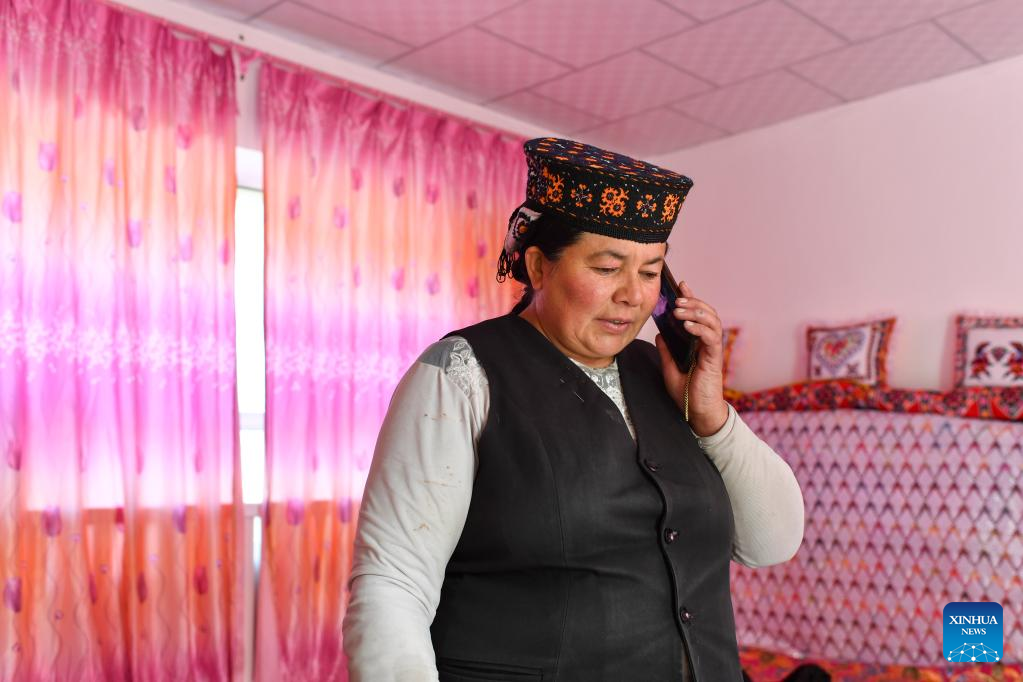
Nanik Kukan gives a phone call to her busband Duri Jarman in Aimin Village of Taxkorgan Tajik Autonomous County, northwest China's Xinjiang Uygur Autonomous Region, Nov. 25, 2019. Before the relocation, she had to go to the township government if she wants to call her relatives.
The life of herdsman Duri Jarman is closely tied to two places: the village of Ak Toga Langar, nestled deep in the mountains of Taxkorgan Tajik Autonomous County, and Aimin Village, located near the county seat.
Duri, now 52 years old, spent 47 years living in Ak Toga Langar Village. In the winter of 2018, his family benefited from the relocation policy for poverty alleviation and settled in Aimin Village.
There, they gradually adapted to the changes, enjoying a new life different from that of their ancestors. Duri and his youngest son, Nurkerim, opened a small shop, while both his eldest and second sons found new jobs. The village committee led the villagers in transforming barren land, leveling it, and repairing ditches. Duri's family was allotted 10 mu (0.67 hectares) of land, which they used to grow forage grass.
After roads are improved, Duri's family opted for a modern means of transport instead of camels. Nurkerim has also bought a pickup truck which he uses to run a transport service from the county seat to the village and from the county seat to the Kashgar city area.
As spring arrives, Duri's family and their fellow villagers are celebrating the Noruz Festival, which is observed by various ethnic groups in Xinjiang. They are immersed in the joy of a better life. (Xinhua/Hu Huhu)
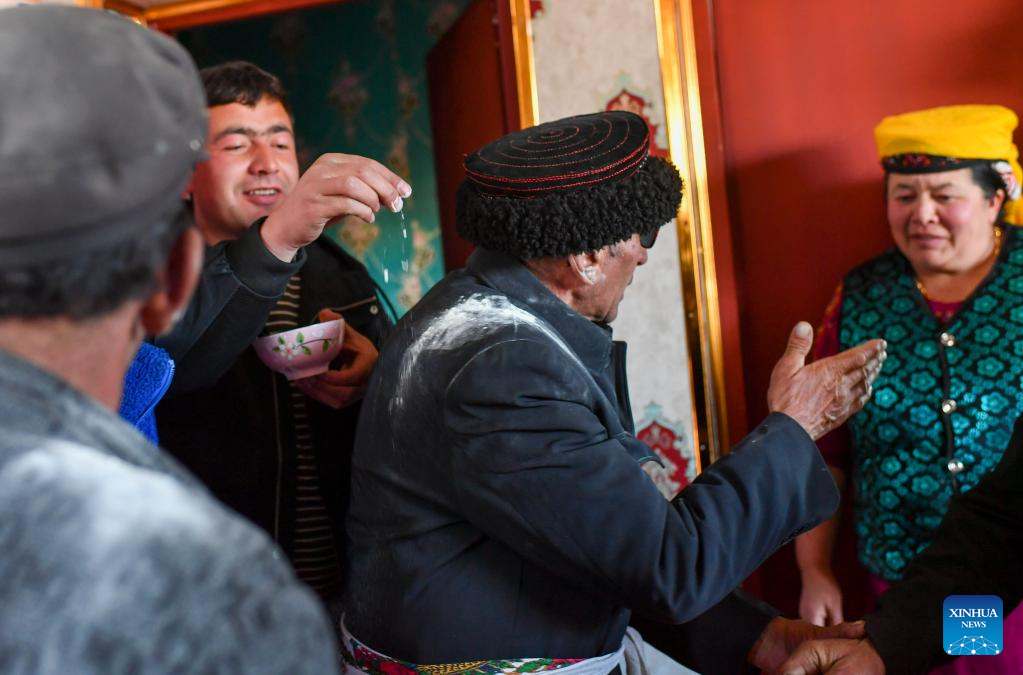
Nurkerim Duri, youngest son of Duri Jarman, applies flour on visiors' shoulders as a traditional means of blessing in Aimin Village of Taxkorgan Tajik Autonomous County, northwest China's Xinjiang Uygur Autonomous Region, March 21, 2023.
The life of herdsman Duri Jarman is closely tied to two places: the village of Ak Toga Langar, nestled deep in the mountains of Taxkorgan Tajik Autonomous County, and Aimin Village, located near the county seat.
Duri, now 52 years old, spent 47 years living in Ak Toga Langar Village. In the winter of 2018, his family benefited from the relocation policy for poverty alleviation and settled in Aimin Village.
There, they gradually adapted to the changes, enjoying a new life different from that of their ancestors. Duri and his youngest son, Nurkerim, opened a small shop, while both his eldest and second sons found new jobs. The village committee led the villagers in transforming barren land, leveling it, and repairing ditches. Duri's family was allotted 10 mu (0.67 hectares) of land, which they used to grow forage grass.
After roads are improved, Duri's family opted for a modern means of transport instead of camels. Nurkerim has also bought a pickup truck which he uses to run a transport service from the county seat to the village and from the county seat to the Kashgar city area.
As spring arrives, Duri's family and their fellow villagers are celebrating the Noruz Festival, which is observed by various ethnic groups in Xinjiang. They are immersed in the joy of a better life. (Xinhua/Hu Huhu)
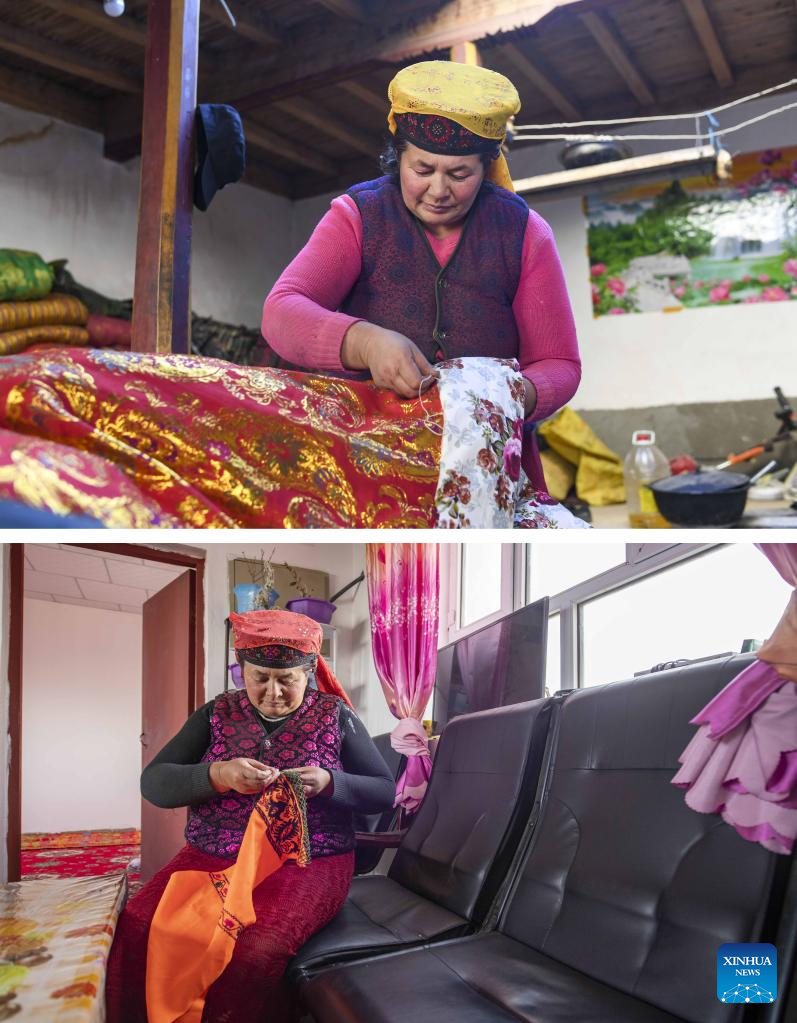
This combo photo shows Nanik Kukan, wife of Duri Jarman, sewing clothes for their relocation in Ak Toga Langar Village deep in the mountains of Taxkorgan Tajik Autonomous County on Nov. 13, 2018 (above) and making hand embroidery at her new home in Aimin Village on June 3, 2020. The life of herdsman Duri Jarman is closely tied to two places: the village of Ak Toga Langar, nestled deep in the mountains of Taxkorgan Tajik Autonomous County, and Aimin Village, located near the county seat.
Duri, now 52 years old, spent 47 years living in Ak Toga Langar Village. In the winter of 2018, his family benefited from the relocation policy for poverty alleviation and settled in Aimin Village.
There, they gradually adapted to the changes, enjoying a new life different from that of their ancestors. Duri and his youngest son, Nurkerim, opened a small shop, while both his eldest and second sons found new jobs. The village committee led the villagers in transforming barren land, leveling it, and repairing ditches. Duri's family was allotted 10 mu (0.67 hectares) of land, which they used to grow forage grass.
After roads are improved, Duri's family opted for a modern means of transport instead of camels. Nurkerim has also bought a pickup truck which he uses to run a transport service from the county seat to the village and from the county seat to the Kashgar city area.
As spring arrives, Duri's family and their fellow villagers are celebrating the Noruz Festival, which is observed by various ethnic groups in Xinjiang. They are immersed in the joy of a better life. (Xinhua/Hu Huhu)
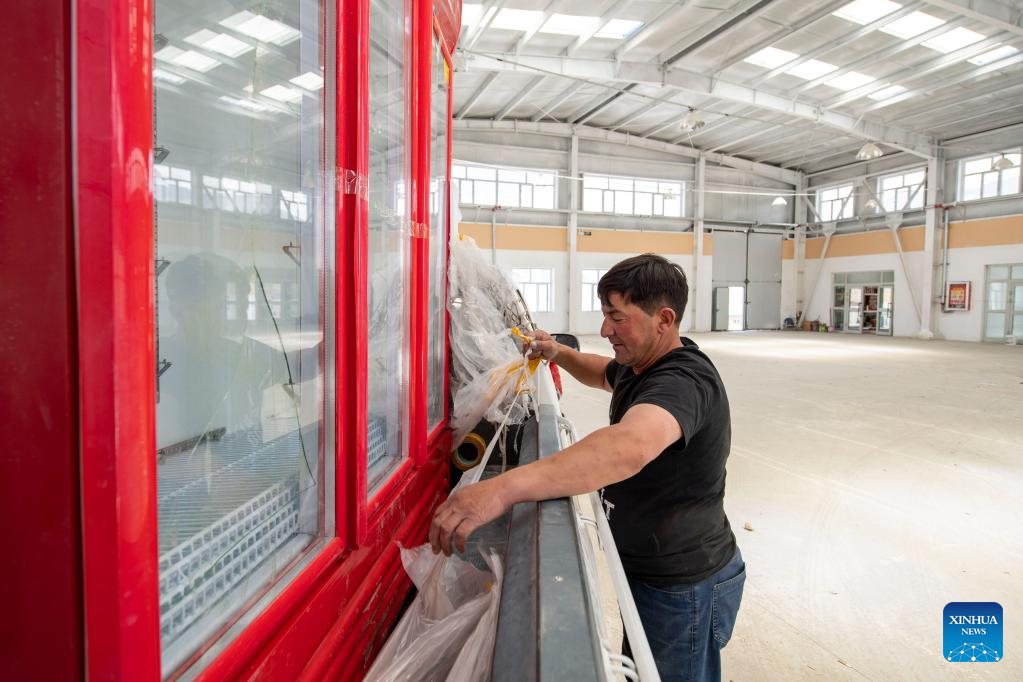
Duri Jarman checks a refrigerator he has bought for his store in Aimin Village of Taxkorgan Tajik Autonomous County, northwest China's Xinjiang Uygur Autonomous Region, June 24, 2020.
The life of herdsman Duri Jarman is closely tied to two places: the village of Ak Toga Langar, nestled deep in the mountains of Taxkorgan Tajik Autonomous County, and Aimin Village, located near the county seat.
Duri, now 52 years old, spent 47 years living in Ak Toga Langar Village. In the winter of 2018, his family benefited from the relocation policy for poverty alleviation and settled in Aimin Village.
There, they gradually adapted to the changes, enjoying a new life different from that of their ancestors. Duri and his youngest son, Nurkerim, opened a small shop, while both his eldest and second sons found new jobs. The village committee led the villagers in transforming barren land, leveling it, and repairing ditches. Duri's family was allotted 10 mu (0.67 hectares) of land, which they used to grow forage grass.
After roads are improved, Duri's family opted for a modern means of transport instead of camels. Nurkerim has also bought a pickup truck which he uses to run a transport service from the county seat to the village and from the county seat to the Kashgar city area.
As spring arrives, Duri's family and their fellow villagers are celebrating the Noruz Festival, which is observed by various ethnic groups in Xinjiang. They are immersed in the joy of a better life. (Xinhua/Hu Huhu)
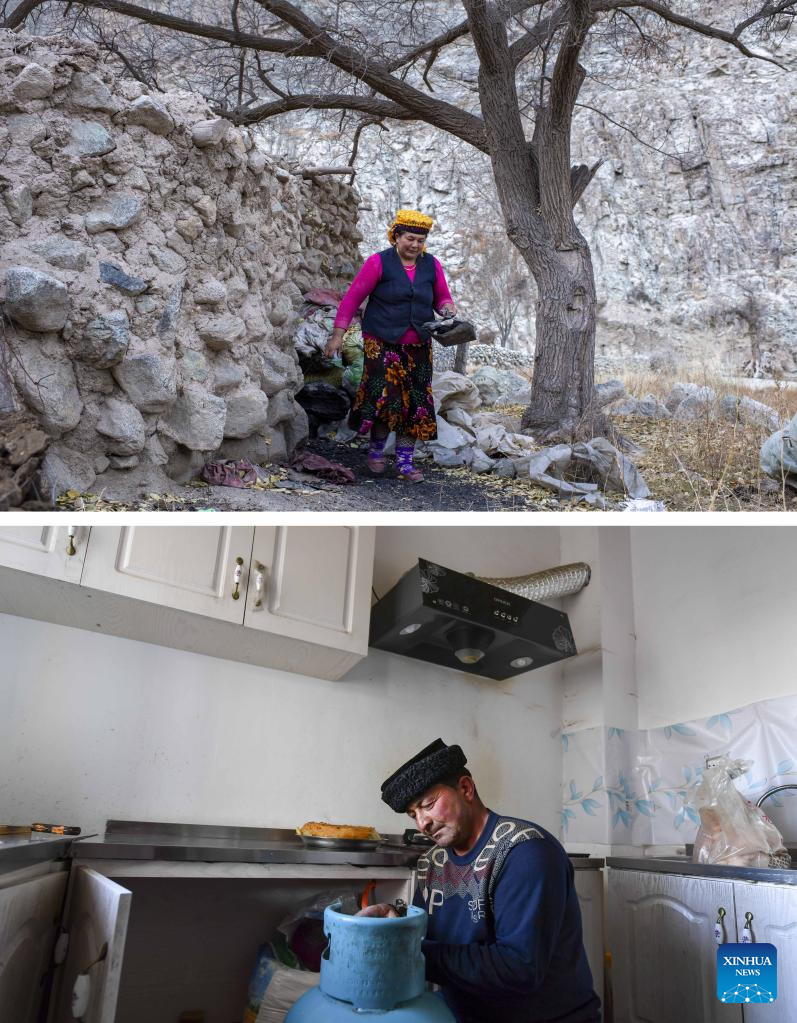
This combo photo shows Nanik Kukan, wife of Duri Jarman, fetching coal for cooking in Ak Toga Langar Village deep in the mountains of Taxkorgan Tajik Autonomous County on Nov. 16, 2018 (above) and Duri Jarman repairing liquid gas storage tank at his new home in Aimin Village on June 3, 2020.
The life of herdsman Duri Jarman is closely tied to two places: the village of Ak Toga Langar, nestled deep in the mountains of Taxkorgan Tajik Autonomous County, and Aimin Village, located near the county seat.
Duri, now 52 years old, spent 47 years living in Ak Toga Langar Village. In the winter of 2018, his family benefited from the relocation policy for poverty alleviation and settled in Aimin Village.
There, they gradually adapted to the changes, enjoying a new life different from that of their ancestors. Duri and his youngest son, Nurkerim, opened a small shop, while both his eldest and second sons found new jobs. The village committee led the villagers in transforming barren land, leveling it, and repairing ditches. Duri's family was allotted 10 mu (0.67 hectares) of land, which they used to grow forage grass.
After roads are improved, Duri's family opted for a modern means of transport instead of camels. Nurkerim has also bought a pickup truck which he uses to run a transport service from the county seat to the village and from the county seat to the Kashgar city area.
As spring arrives, Duri's family and their fellow villagers are celebrating the Noruz Festival, which is observed by various ethnic groups in Xinjiang. They are immersed in the joy of a better life. (Xinhua/Hu Huhu)
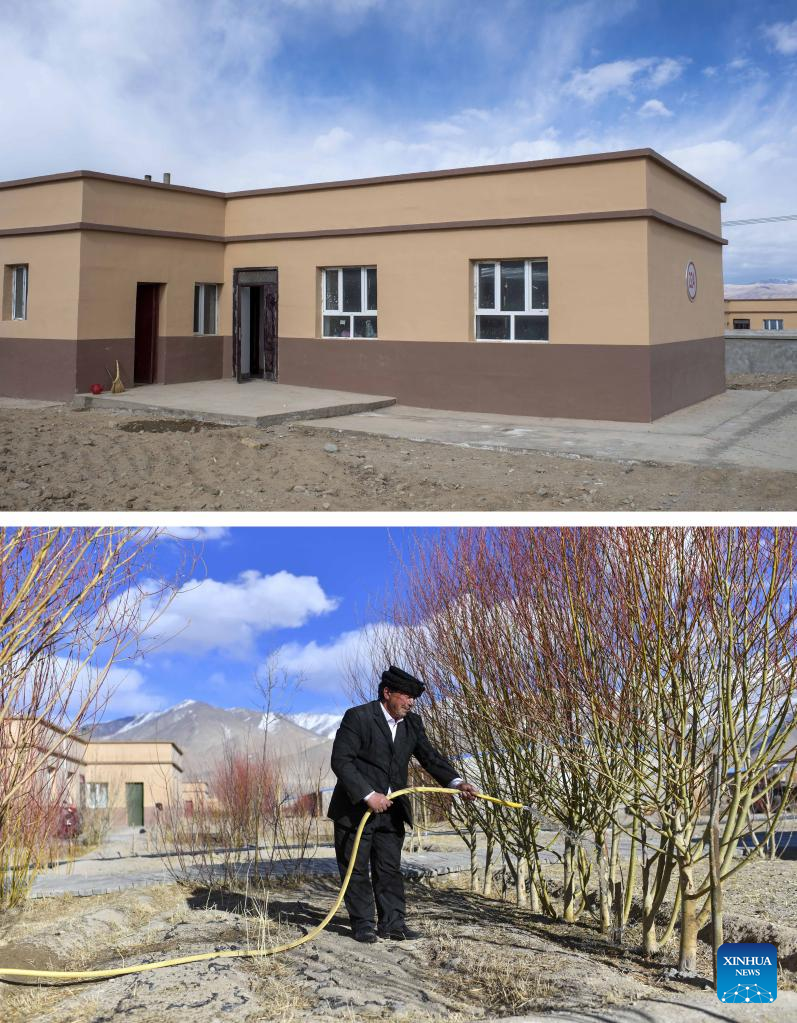
This combo photo shows the exterior view of Duri Jarman's new house upon his relocation in Aimin Village of Taxkorgan Tajik Autonomous County on Nov. 18, 2018 (above) and Duri Jarman watering willows in his yard on March 21, 2023.
The life of herdsman Duri Jarman is closely tied to two places: the village of Ak Toga Langar, nestled deep in the mountains of Taxkorgan Tajik Autonomous County, and Aimin Village, located near the county seat.
Duri, now 52 years old, spent 47 years living in Ak Toga Langar Village. In the winter of 2018, his family benefited from the relocation policy for poverty alleviation and settled in Aimin Village.
There, they gradually adapted to the changes, enjoying a new life different from that of their ancestors. Duri and his youngest son, Nurkerim, opened a small shop, while both his eldest and second sons found new jobs. The village committee led the villagers in transforming barren land, leveling it, and repairing ditches. Duri's family was allotted 10 mu (0.67 hectares) of land, which they used to grow forage grass.
After roads are improved, Duri's family opted for a modern means of transport instead of camels. Nurkerim has also bought a pickup truck which he uses to run a transport service from the county seat to the village and from the county seat to the Kashgar city area.
As spring arrives, Duri's family and their fellow villagers are celebrating the Noruz Festival, which is observed by various ethnic groups in Xinjiang. They are immersed in the joy of a better life. (Xinhua/Hu Huhu)
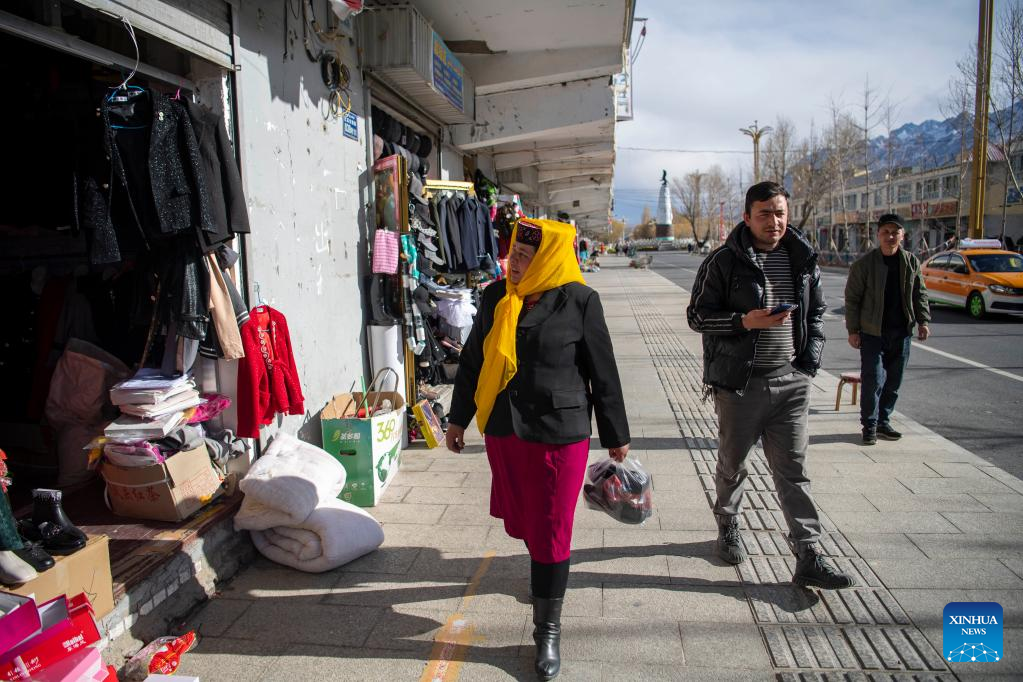
Nurkerim Duri (C) and his mother Nanik Kukan (L) shop for daily necessities in the downtown area of Taxkorgan Tajik Autonomous County, northwest China's Xinjiang Uygur Autonomous Region, March 19, 2023. Before their relocation in Aimin Village, Nanik seldom visited the county due to inconvenient transportation.
The life of herdsman Duri Jarman is closely tied to two places: the village of Ak Toga Langar, nestled deep in the mountains of Taxkorgan Tajik Autonomous County, and Aimin Village, located near the county seat.
Duri, now 52 years old, spent 47 years living in Ak Toga Langar Village. In the winter of 2018, his family benefited from the relocation policy for poverty alleviation and settled in Aimin Village.
There, they gradually adapted to the changes, enjoying a new life different from that of their ancestors. Duri and his youngest son, Nurkerim, opened a small shop, while both his eldest and second sons found new jobs. The village committee led the villagers in transforming barren land, leveling it, and repairing ditches. Duri's family was allotted 10 mu (0.67 hectares) of land, which they used to grow forage grass.
After roads are improved, Duri's family opted for a modern means of transport instead of camels. Nurkerim has also bought a pickup truck which he uses to run a transport service from the county seat to the village and from the county seat to the Kashgar city area.
As spring arrives, Duri's family and their fellow villagers are celebrating the Noruz Festival, which is observed by various ethnic groups in Xinjiang. They are immersed in the joy of a better life. (Xinhua/Hu Huhu)
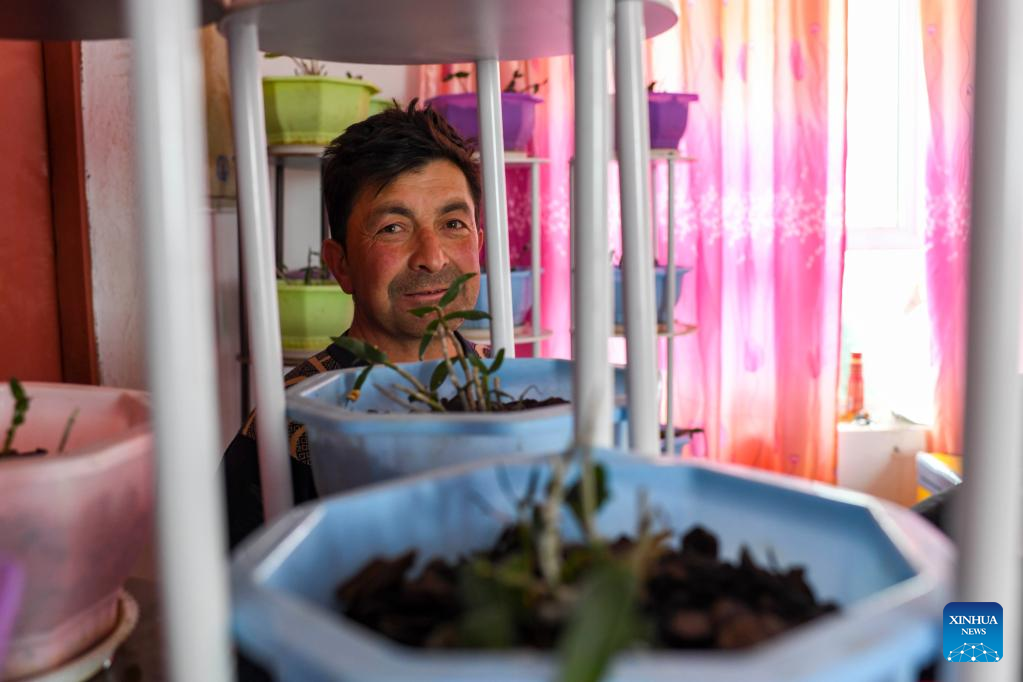
Duri Jarman checks dendrobium officinale planted at his home in Aimin Village of Taxkorgan Tajik Autonomous County, northwest China's Xinjiang Uygur Autonomous Region, June 26, 2019.
The life of herdsman Duri Jarman is closely tied to two places: the village of Ak Toga Langar, nestled deep in the mountains of Taxkorgan Tajik Autonomous County, and Aimin Village, located near the county seat.
Duri, now 52 years old, spent 47 years living in Ak Toga Langar Village. In the winter of 2018, his family benefited from the relocation policy for poverty alleviation and settled in Aimin Village.
There, they gradually adapted to the changes, enjoying a new life different from that of their ancestors. Duri and his youngest son, Nurkerim, opened a small shop, while both his eldest and second sons found new jobs. The village committee led the villagers in transforming barren land, leveling it, and repairing ditches. Duri's family was allotted 10 mu (0.67 hectares) of land, which they used to grow forage grass.
After roads are improved, Duri's family opted for a modern means of transport instead of camels. Nurkerim has also bought a pickup truck which he uses to run a transport service from the county seat to the village and from the county seat to the Kashgar city area.
As spring arrives, Duri's family and their fellow villagers are celebrating the Noruz Festival, which is observed by various ethnic groups in Xinjiang. They are immersed in the joy of a better life. (Xinhua/Hu Huhu)
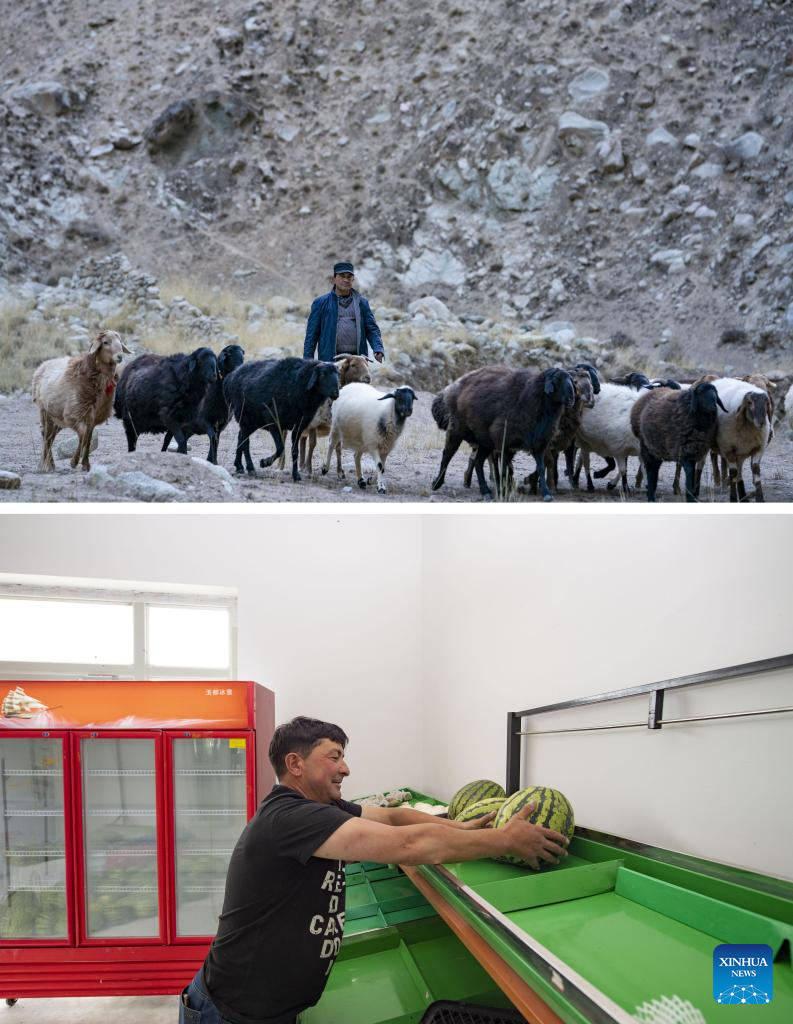
This combo photo shows Duri Jarman herding before relocation in the mountains of Taxkorgan Tajik Autonomous County on Nov. 16, 2018 (above) and arranging watermelons for selling at his store in Aimin Village on June 24, 2020.
The life of herdsman Duri Jarman is closely tied to two places: the village of Ak Toga Langar, nestled deep in the mountains of Taxkorgan Tajik Autonomous County, and Aimin Village, located near the county seat.
Duri, now 52 years old, spent 47 years living in Ak Toga Langar Village. In the winter of 2018, his family benefited from the relocation policy for poverty alleviation and settled in Aimin Village.
There, they gradually adapted to the changes, enjoying a new life different from that of their ancestors. Duri and his youngest son, Nurkerim, opened a small shop, while both his eldest and second sons found new jobs. The village committee led the villagers in transforming barren land, leveling it, and repairing ditches. Duri's family was allotted 10 mu (0.67 hectares) of land, which they used to grow forage grass.
After roads are improved, Duri's family opted for a modern means of transport instead of camels. Nurkerim has also bought a pickup truck which he uses to run a transport service from the county seat to the village and from the county seat to the Kashgar city area.
As spring arrives, Duri's family and their fellow villagers are celebrating the Noruz Festival, which is observed by various ethnic groups in Xinjiang. They are immersed in the joy of a better life. (Xinhua/Hu Huhu)
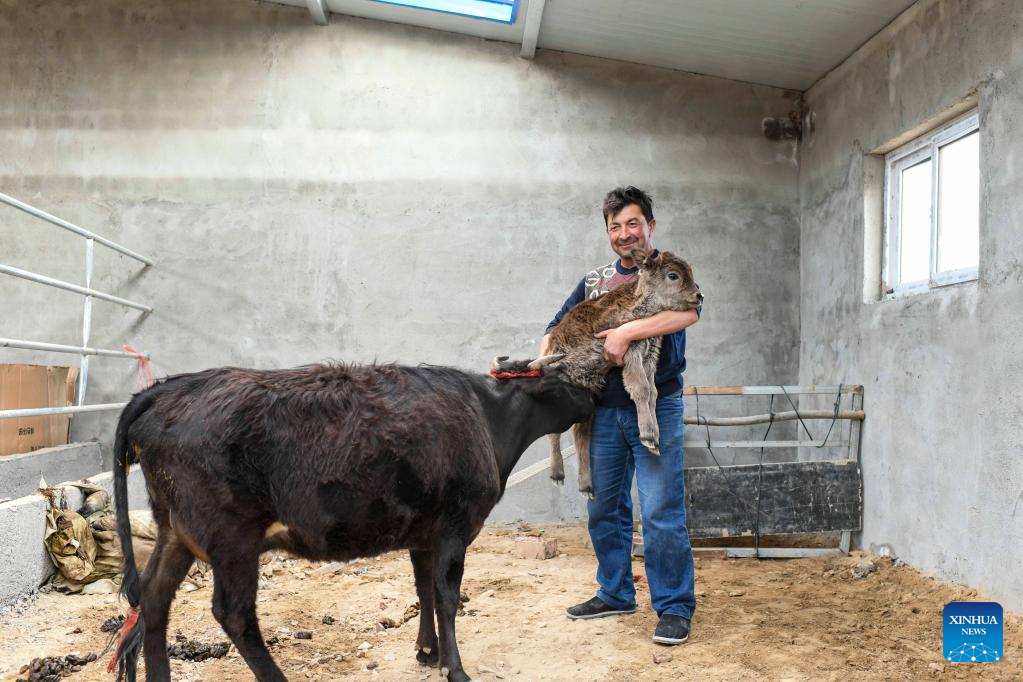
Duri Jarman moves his cows to a standard cowshed in front of his home in Aimin Village of Taxkorgan Tajik Autonomous County, northwest China's Xinjiang Uygur Autonomous Region, June 26, 2019.
The life of herdsman Duri Jarman is closely tied to two places: the village of Ak Toga Langar, nestled deep in the mountains of Taxkorgan Tajik Autonomous County, and Aimin Village, located near the county seat.
Duri, now 52 years old, spent 47 years living in Ak Toga Langar Village. In the winter of 2018, his family benefited from the relocation policy for poverty alleviation and settled in Aimin Village.
There, they gradually adapted to the changes, enjoying a new life different from that of their ancestors. Duri and his youngest son, Nurkerim, opened a small shop, while both his eldest and second sons found new jobs. The village committee led the villagers in transforming barren land, leveling it, and repairing ditches. Duri's family was allotted 10 mu (0.67 hectares) of land, which they used to grow forage grass.
After roads are improved, Duri's family opted for a modern means of transport instead of camels. Nurkerim has also bought a pickup truck which he uses to run a transport service from the county seat to the village and from the county seat to the Kashgar city area.
As spring arrives, Duri's family and their fellow villagers are celebrating the Noruz Festival, which is observed by various ethnic groups in Xinjiang. They are immersed in the joy of a better life. (Xinhua/Hu Huhu)
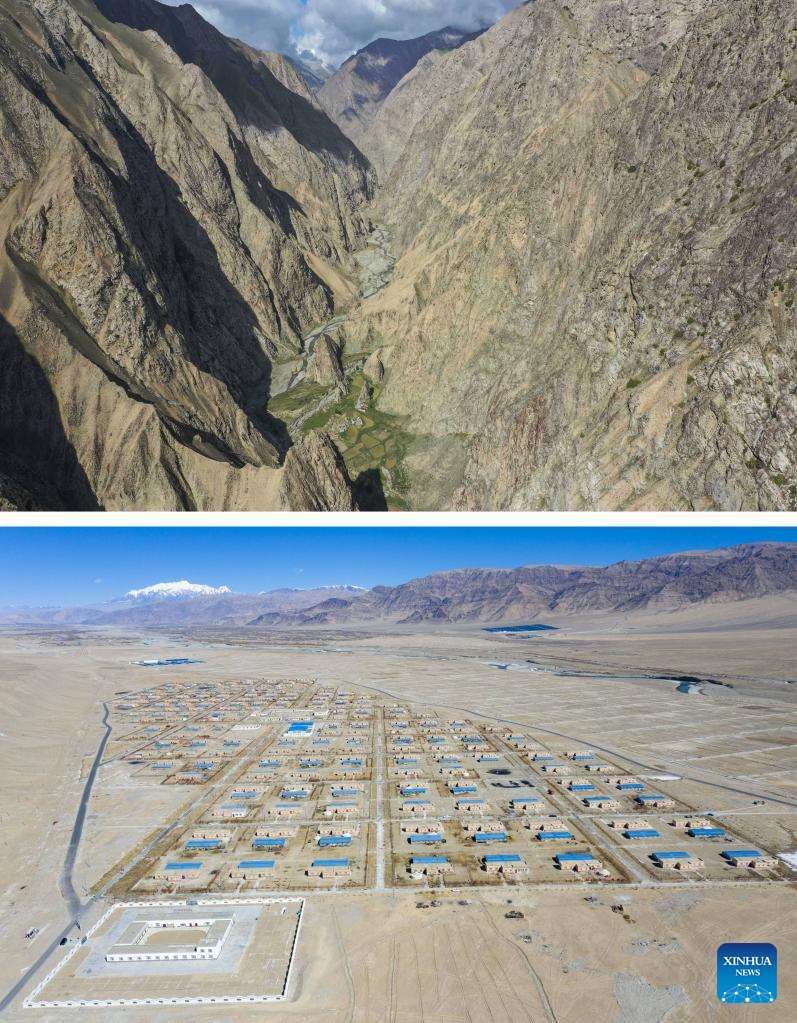
This aerial combo photo shows the valley where Duri Jarman and his family used to live before relocation in Ak Toga Langar Village deep in the mountains of Taxkorgan Tajik Autonomous County on June 20, 2019 (above) and the view of the resettlement area in Aimin Village where they live now on March 17, 2023.
The life of herdsman Duri Jarman is closely tied to two places: the village of Ak Toga Langar, nestled deep in the mountains of Taxkorgan Tajik Autonomous County, and Aimin Village, located near the county seat.
Duri, now 52 years old, spent 47 years living in Ak Toga Langar Village. In the winter of 2018, his family benefited from the relocation policy for poverty alleviation and settled in Aimin Village.
There, they gradually adapted to the changes, enjoying a new life different from that of their ancestors. Duri and his youngest son, Nurkerim, opened a small shop, while both his eldest and second sons found new jobs. The village committee led the villagers in transforming barren land, leveling it, and repairing ditches. Duri's family was allotted 10 mu (0.67 hectares) of land, which they used to grow forage grass.
After roads are improved, Duri's family opted for a modern means of transport instead of camels. Nurkerim has also bought a pickup truck which he uses to run a transport service from the county seat to the village and from the county seat to the Kashgar city area.
As spring arrives, Duri's family and their fellow villagers are celebrating the Noruz Festival, which is observed by various ethnic groups in Xinjiang. They are immersed in the joy of a better life. (Xinhua/Hu Huhu)
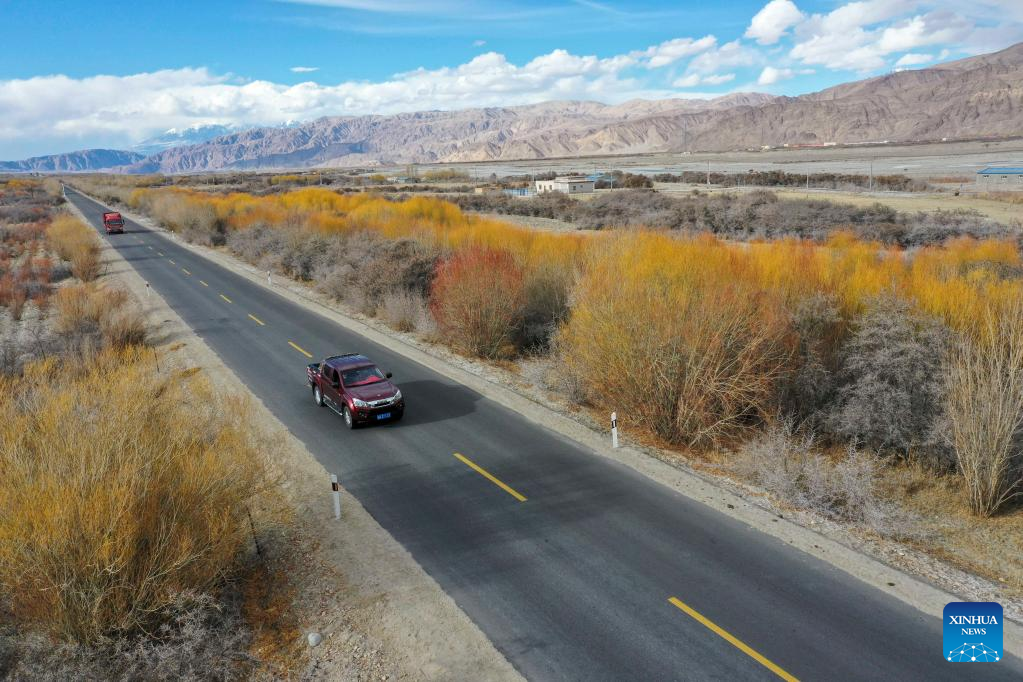
This areial photo taken on March 19, 2023 shows Nurkerim Duri driving back to Aimin Village after replenishing shop stock in Taxkorgan Tajik Autonomous County, northwest China's Xinjiang Uygur Autonomous Region.
The life of herdsman Duri Jarman is closely tied to two places: the village of Ak Toga Langar, nestled deep in the mountains of Taxkorgan Tajik Autonomous County, and Aimin Village, located near the county seat.
Duri, now 52 years old, spent 47 years living in Ak Toga Langar Village. In the winter of 2018, his family benefited from the relocation policy for poverty alleviation and settled in Aimin Village.
There, they gradually adapted to the changes, enjoying a new life different from that of their ancestors. Duri and his youngest son, Nurkerim, opened a small shop, while both his eldest and second sons found new jobs. The village committee led the villagers in transforming barren land, leveling it, and repairing ditches. Duri's family was allotted 10 mu (0.67 hectares) of land, which they used to grow forage grass.
After roads are improved, Duri's family opted for a modern means of transport instead of camels. Nurkerim has also bought a pickup truck which he uses to run a transport service from the county seat to the village and from the county seat to the Kashgar city area.
As spring arrives, Duri's family and their fellow villagers are celebrating the Noruz Festival, which is observed by various ethnic groups in Xinjiang. They are immersed in the joy of a better life.
